This document contains links, video, and audio content, and therefore is best viewed online via https://vitrinekast.xyz/application
If there are any questions, please reach out via rosa@vitrinekast.xyz!
100 Days of digital wasteland
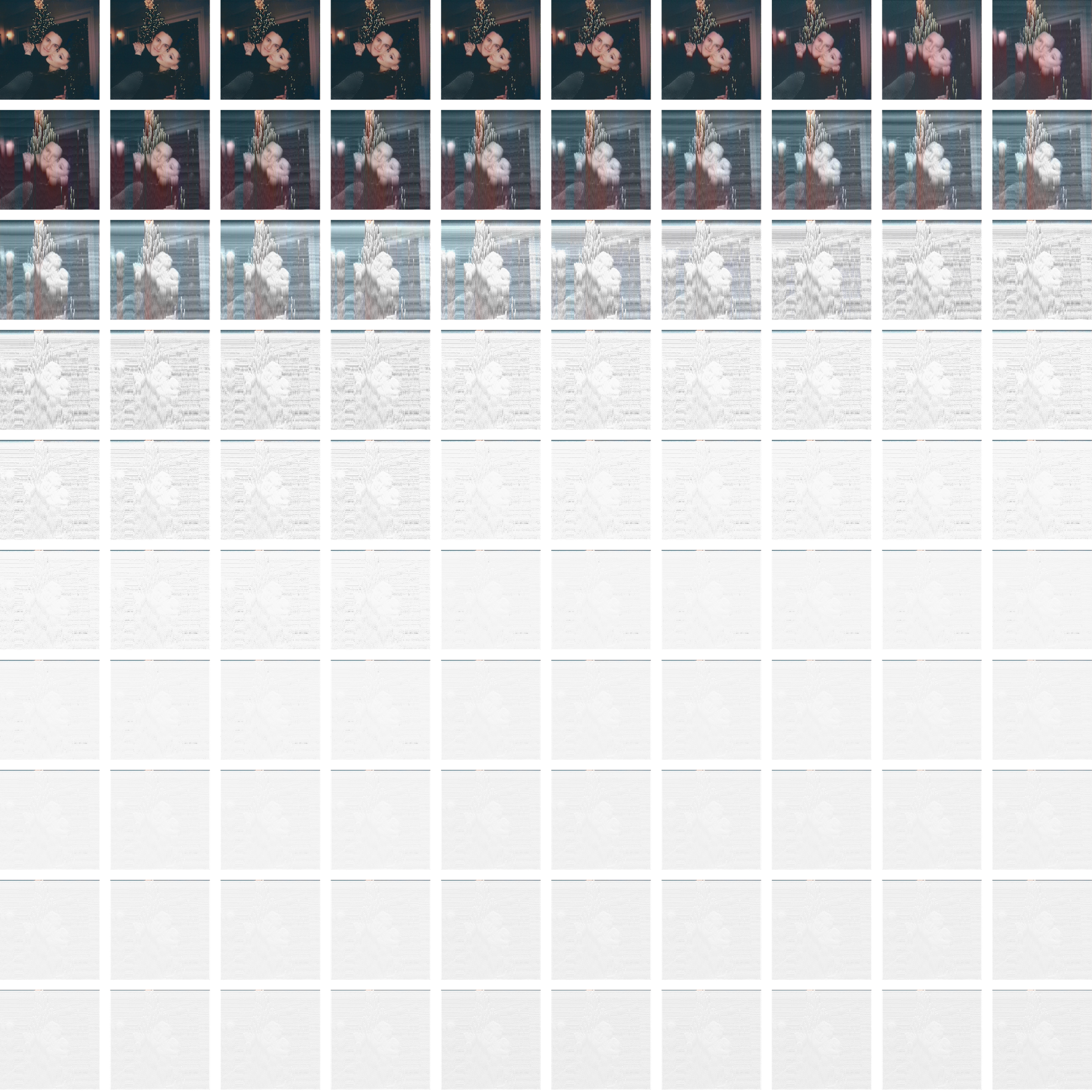
What happens if data has an expiration date, and public content decays over time?
These booklets document the outcomes of an algorithm that performs just that. Popular Instagram posts are taken through the algorithm, which decays the images over the course of 100 days, by slowly replacing pixels.
The booklets will be available as Original Copies* (Every booklet is a xerox copy of the previous booklet).
A live running version of the algorithm is available here and on GitHub
.Files
-
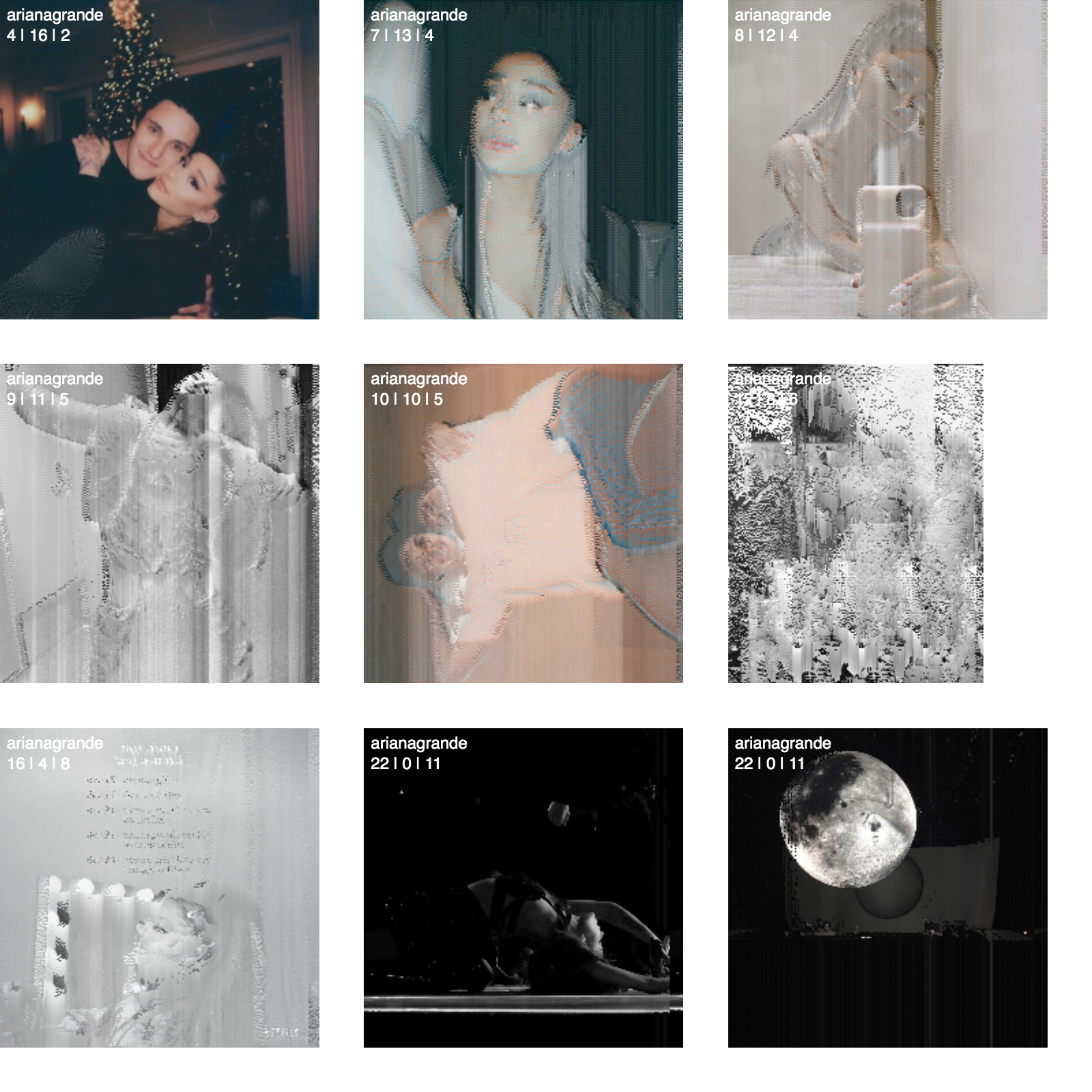
Feed @arianagrande on December 30 2020
Feed @arianagrande on December 30 2020 -
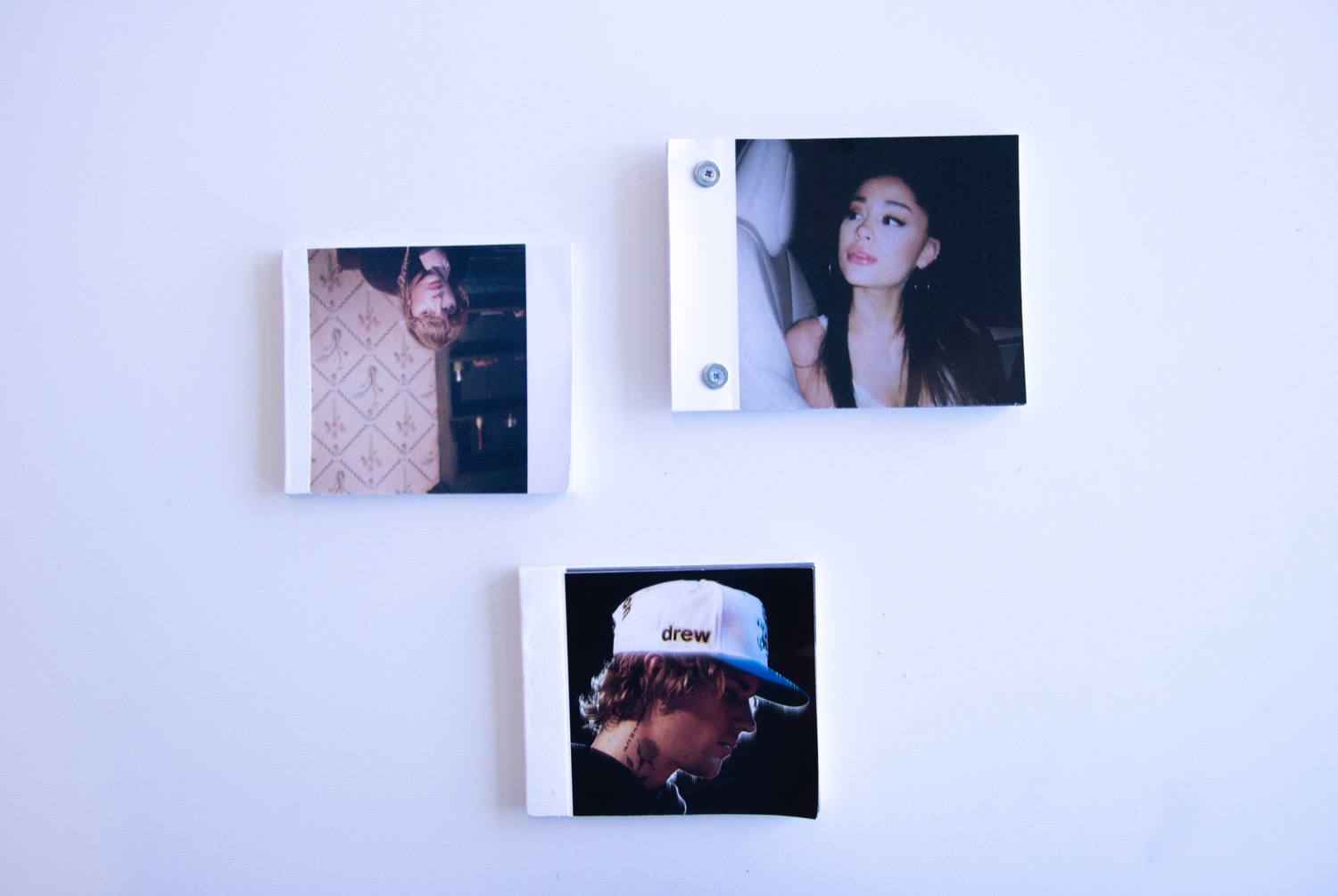
100 days in a booklet
100 days in a booklet -
The Daisy Engine: An interactive narrative engine
With Elastique, Wetteloos in 2015 - 2020 for WNF, Beeld en Geluid, BNNVARA
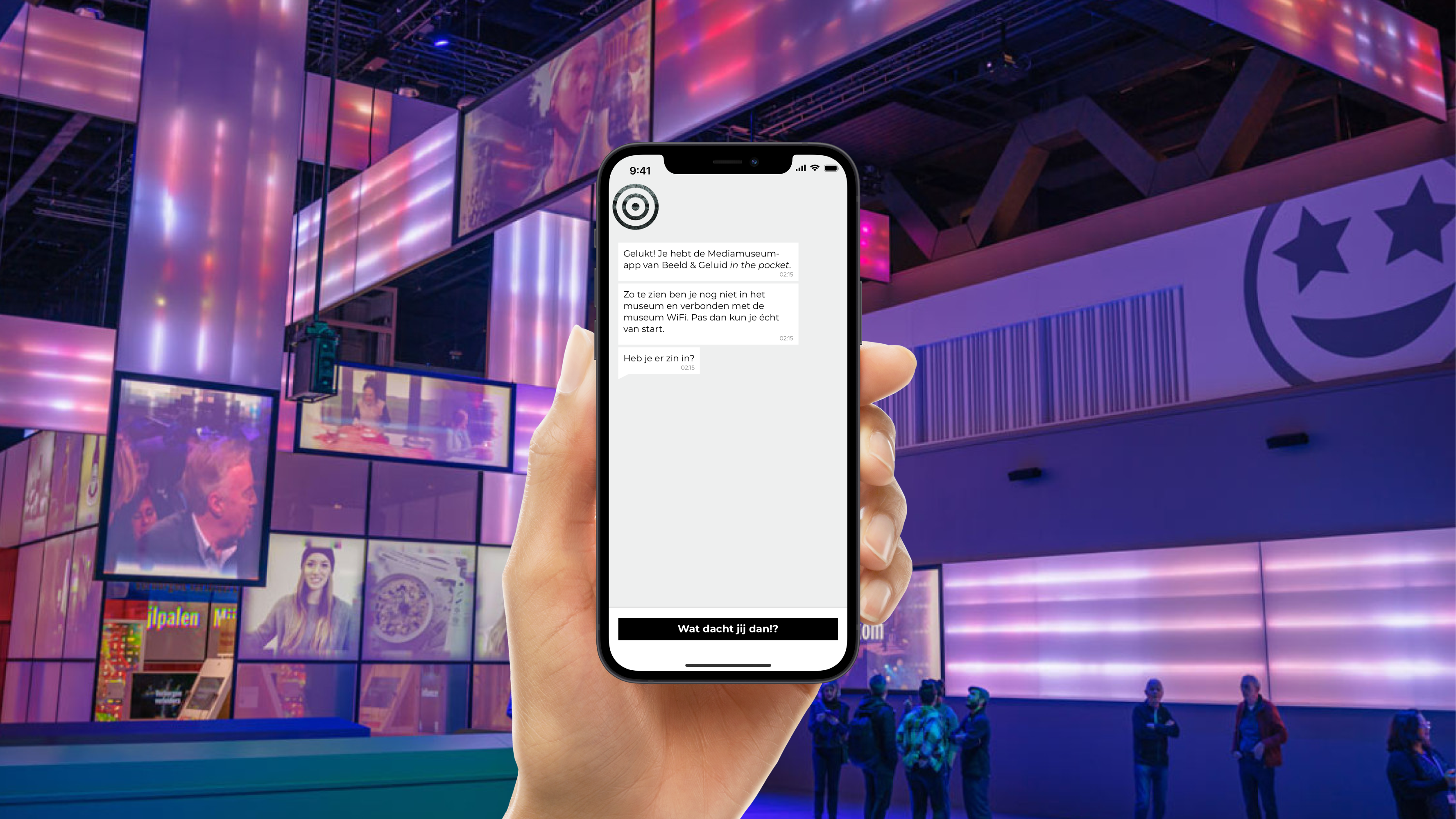
The Daisy Engine is a custom narrative engine that allowed us to create interactive, non-linear narratives. The engine is used in projects for Dutch broadcasting association BNNVARA, the World Wildlife Fund (WNF) and the new Beeld en Geluid Museum. The backbone of the engine are CSV's. Each chapter of a narrative in the Engine has it's own. Writers (and users) can jump between sections both inside and outside of a chapter, allowing for endless branching; The only limits were in our imagination.
Together with the BNNVARA we used the engine to create the first (unreleased :() "Whatsapp Soap", a transmedia experience. Over the course of a season players would receive text messages via the primary storytelling medium: the web app with a WhatsApp-like interface. Here, they could interact with various characters using a multiple-choice answering system. The story world further unfolded via the secondary, more passive, layer; through websites, articles, Youtube videos, etc.
I've created a prototype and written a story allowing 2 weeks of gameplay, accessible via https://www.wetteloos.nl/daisy/.
Most recently, we've used the engine as the core of the companion app of the new Beeld en Geluid Museum, allowing for a fully personalized and seamless museum trip. At the time, this really felt like the project of a lifetime, but as museum exhibitions take a lot of time to build, I left Elastique before the opening in 2023.
Links
- More about Beeld en Geluid
- More about Plastic Afvallen for WNF (Dutch article)
.Files
-
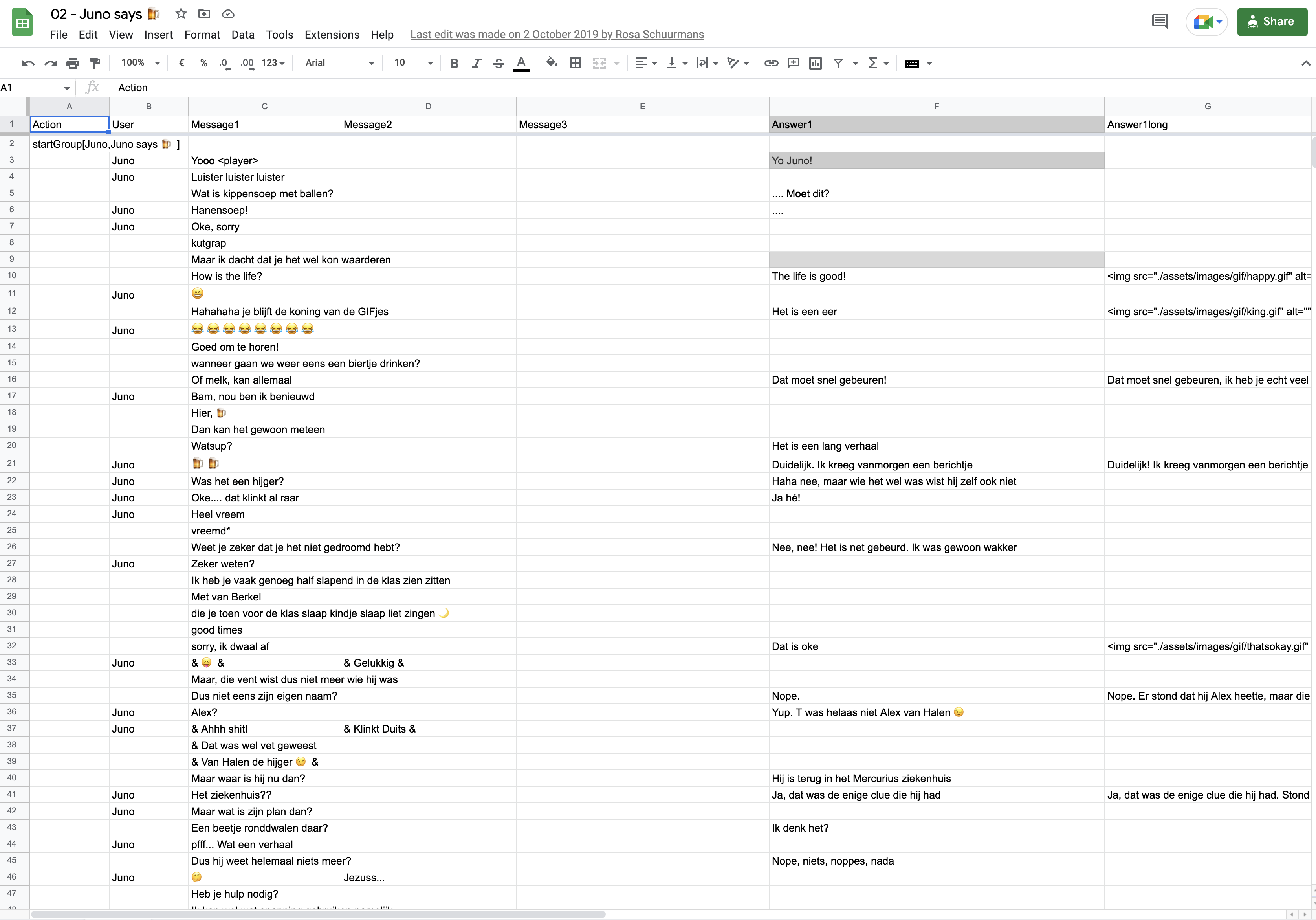
Narrative engine is fully built on spreadsheets
Narrative engine is fully built on spreadsheets -
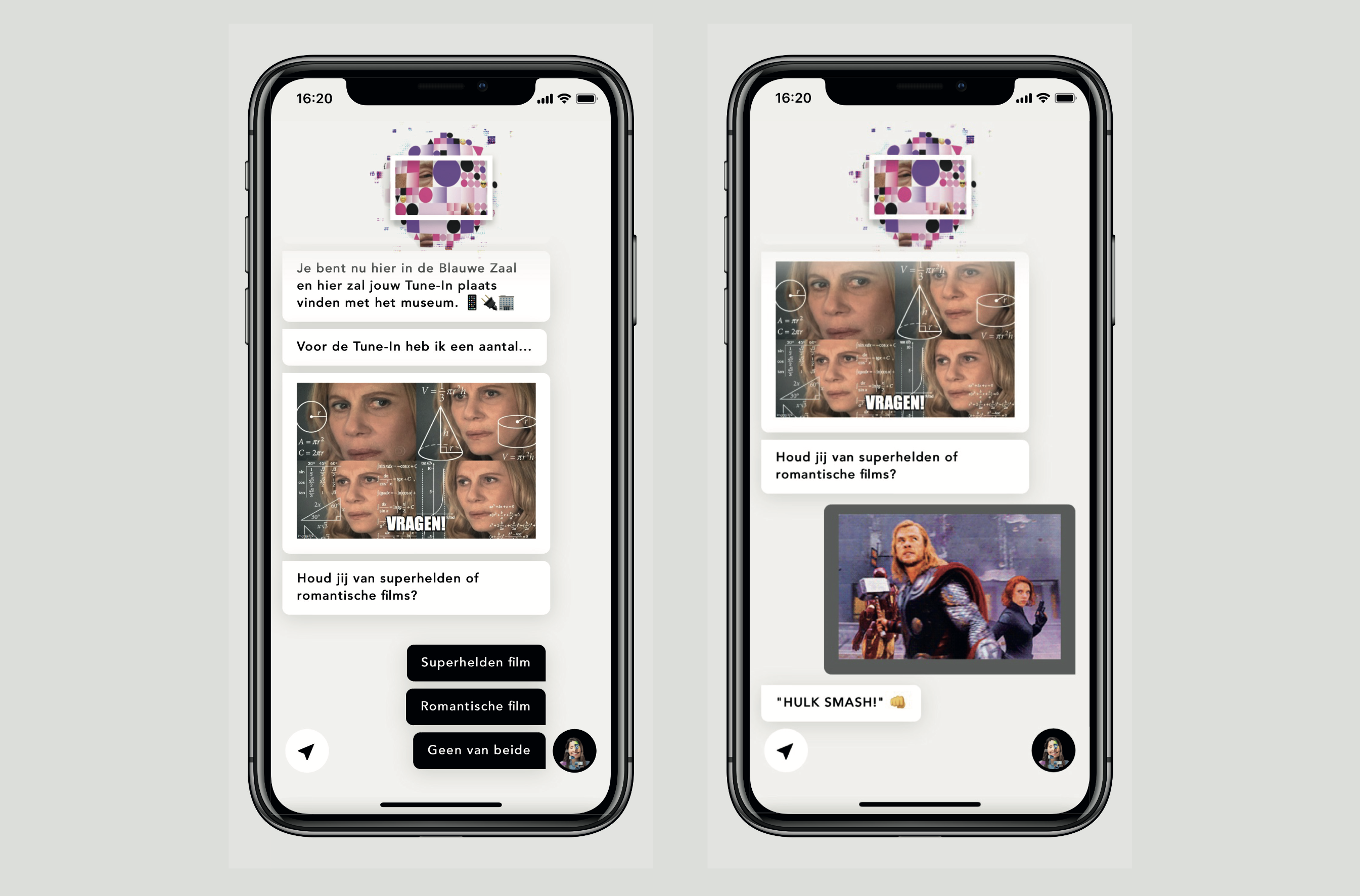
The Beeld en Geluid Companion app
The Beeld en Geluid Companion app -
WNF Promo at Rotterdam Central Station
WNF Promo at Rotterdam Central Station
HIVE004
in 2019 using Gamemaker Studio, HTML/CSS
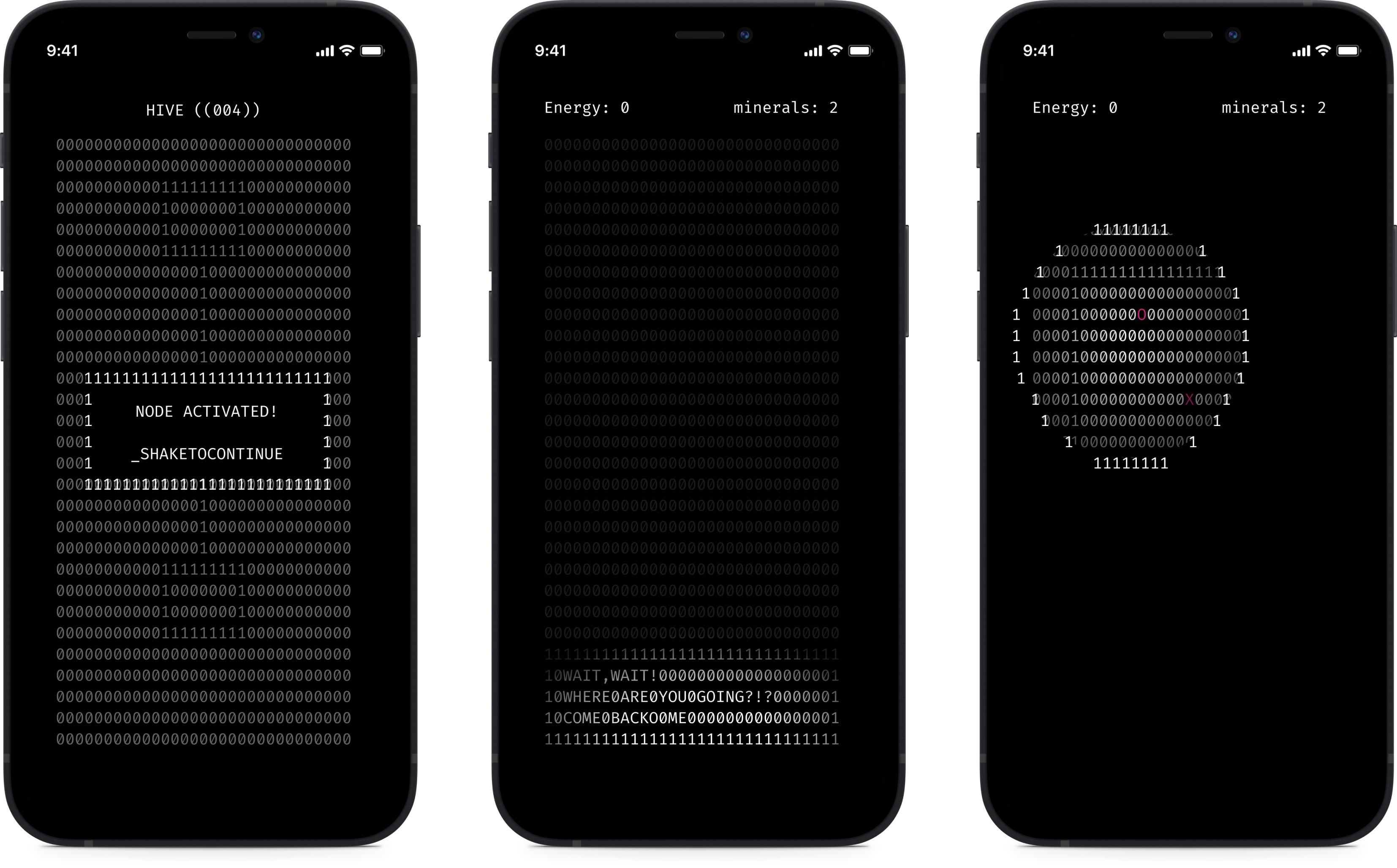
In HIVE004 the roles are reversed. In this game, the player is not in charge but expected to follow the beat, guided by the voice of the queen. Be a submissive part of the colony, do as your told and we're sure you'll have a great time!
Your browser does not support the audio element. Try Firefox instead.
HIVE004 is inspired by ant colonies, and its hierarchical structures and ways of navigating as a colony. Players are initially motivated to, just like in ant colonies, follow the beat of a drum, and repeat a simple pattern. But the opposite is true; the true goal of the game is to break through the obvious patterns, and start looking for clues of what the real game is. Discover and unlock nodes outside of the game to break the pattern.
Printed Matter
in June 2022
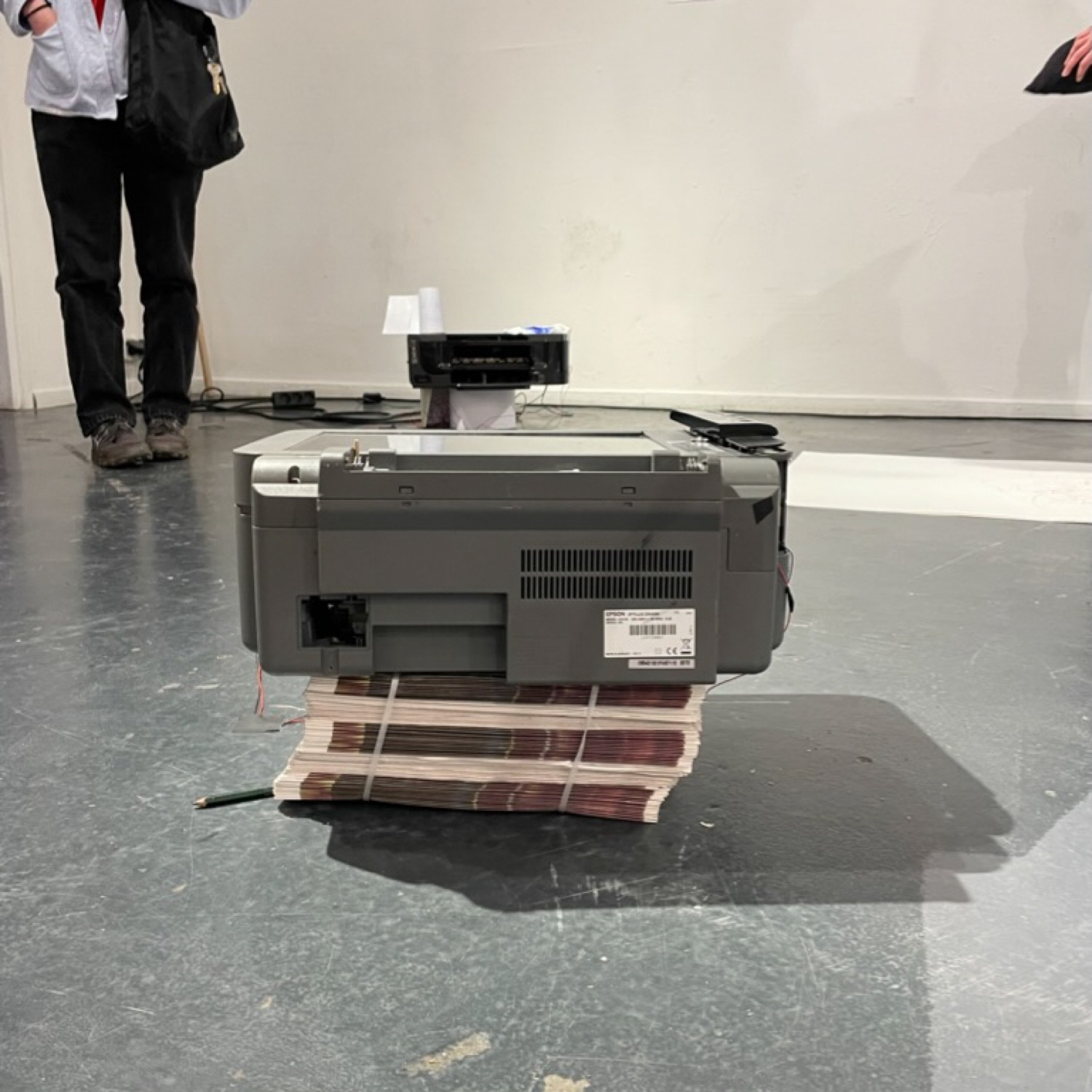
Two abandoned printers, observing the world around them. The printers are connected to each other using a long sheet of paper creating an infinite loop. Both printers are modified. One printer makes a mark every time it notices someone passing, and the other printer erases the marks again.
What started as the ambition to create my own pen plotter; a dream that changed due to budget reasons (stepper motors are expensive) and the fact that I kept finding orphan printers everywhere, resulted in a series of modified printers. Some printers are in mint condition, others are stripped to the bare minimum.
All printers are time-based. Instead of being able to draw lines for a specified amount of pixels, points, or centimeters, the printhead and paper feeder move for a set amount of seconds. As the traveled distance is dependent on the speed of the motor, and therefore the amount of voltage left in the battery, no line created by these machines is the same. Or controllable.
.Files
-
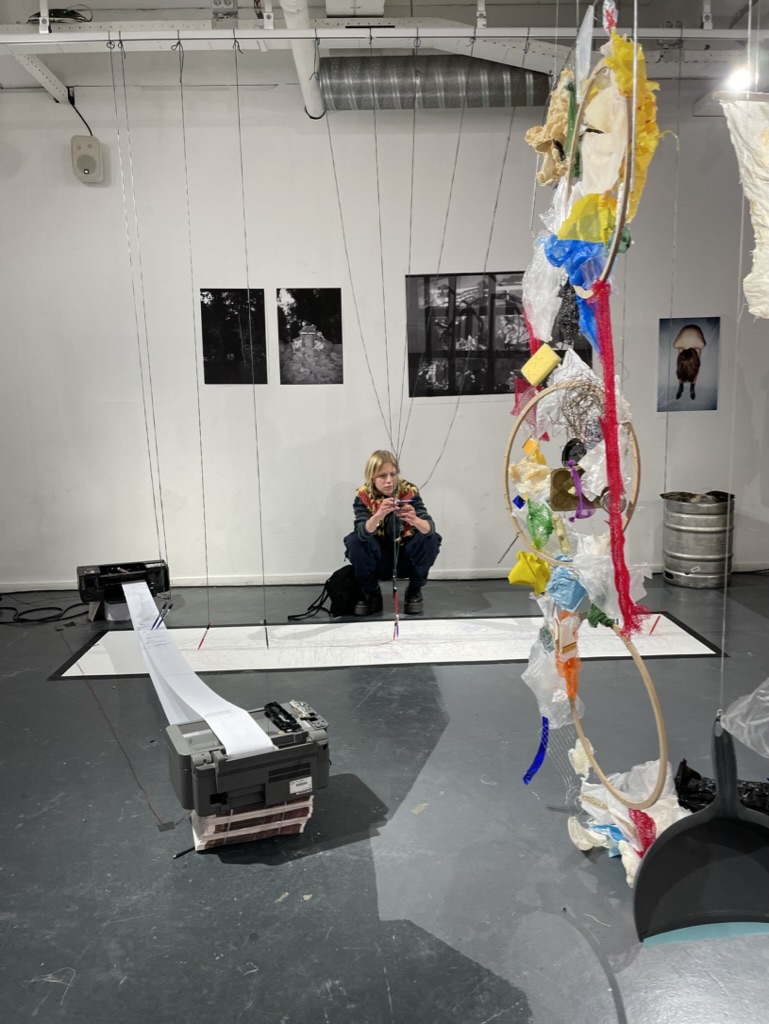
Printed Matter in the S/ash Gallery
Printed Matter in the S/ash Gallery -
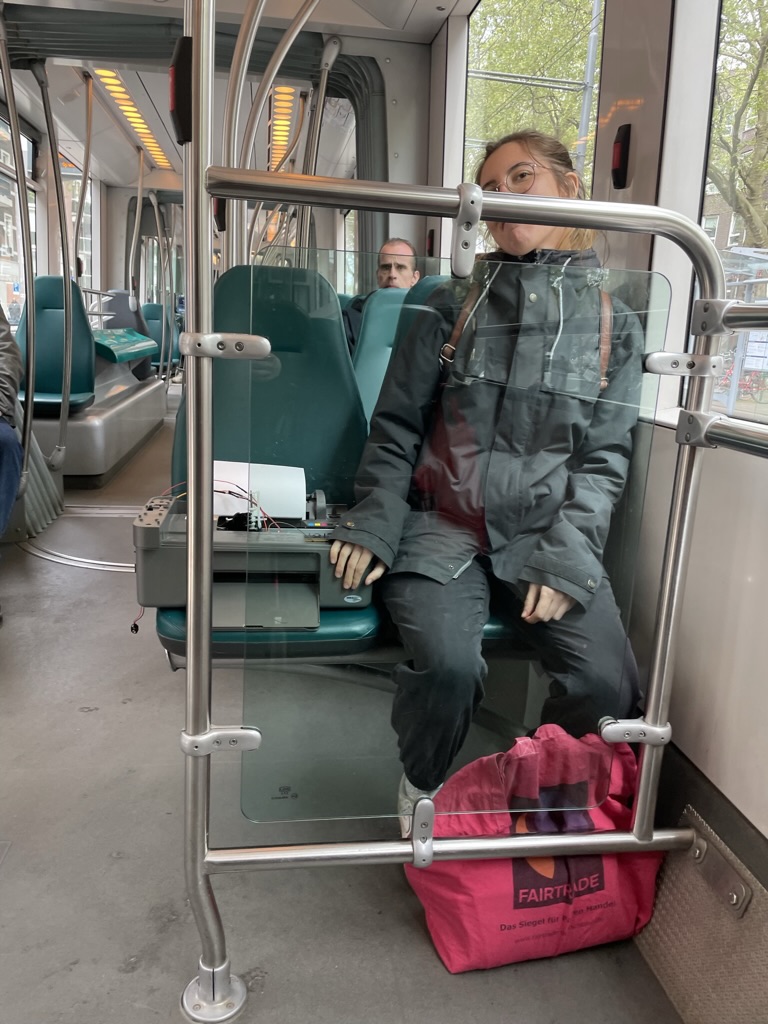
Printed Matter in the Tram
Printed Matter in the Tram -
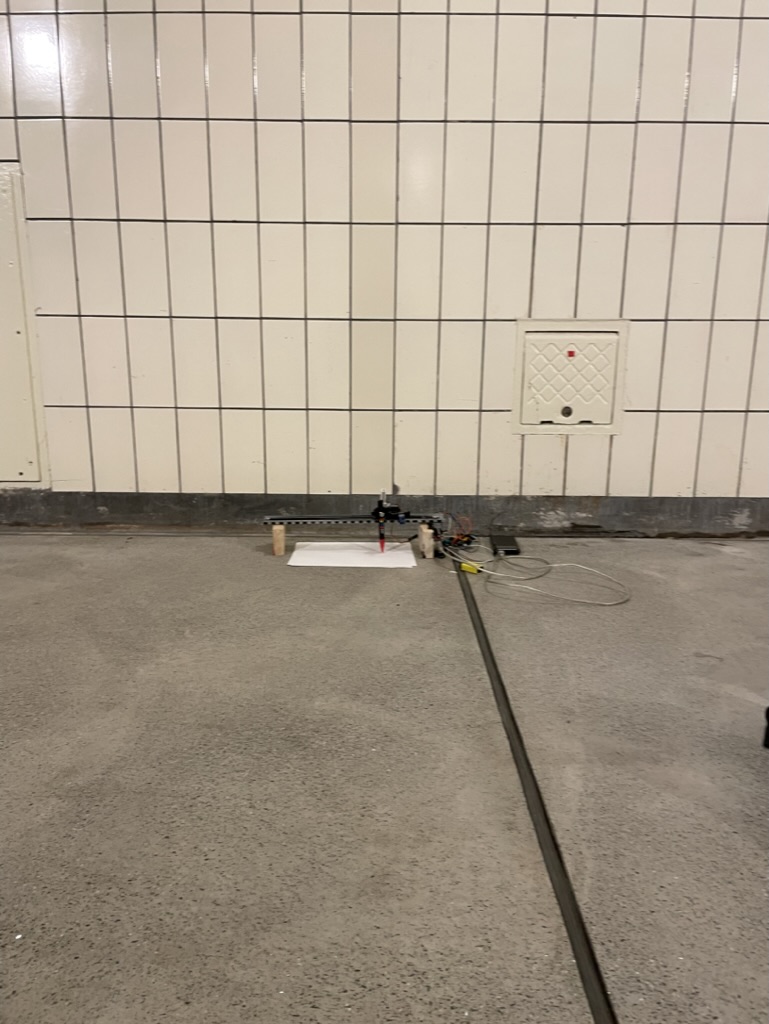
Printed Matter in the Maastunnel
Printed Matter in the Maastunnel
Rub me the right way
in 2021 using oil paint, processing
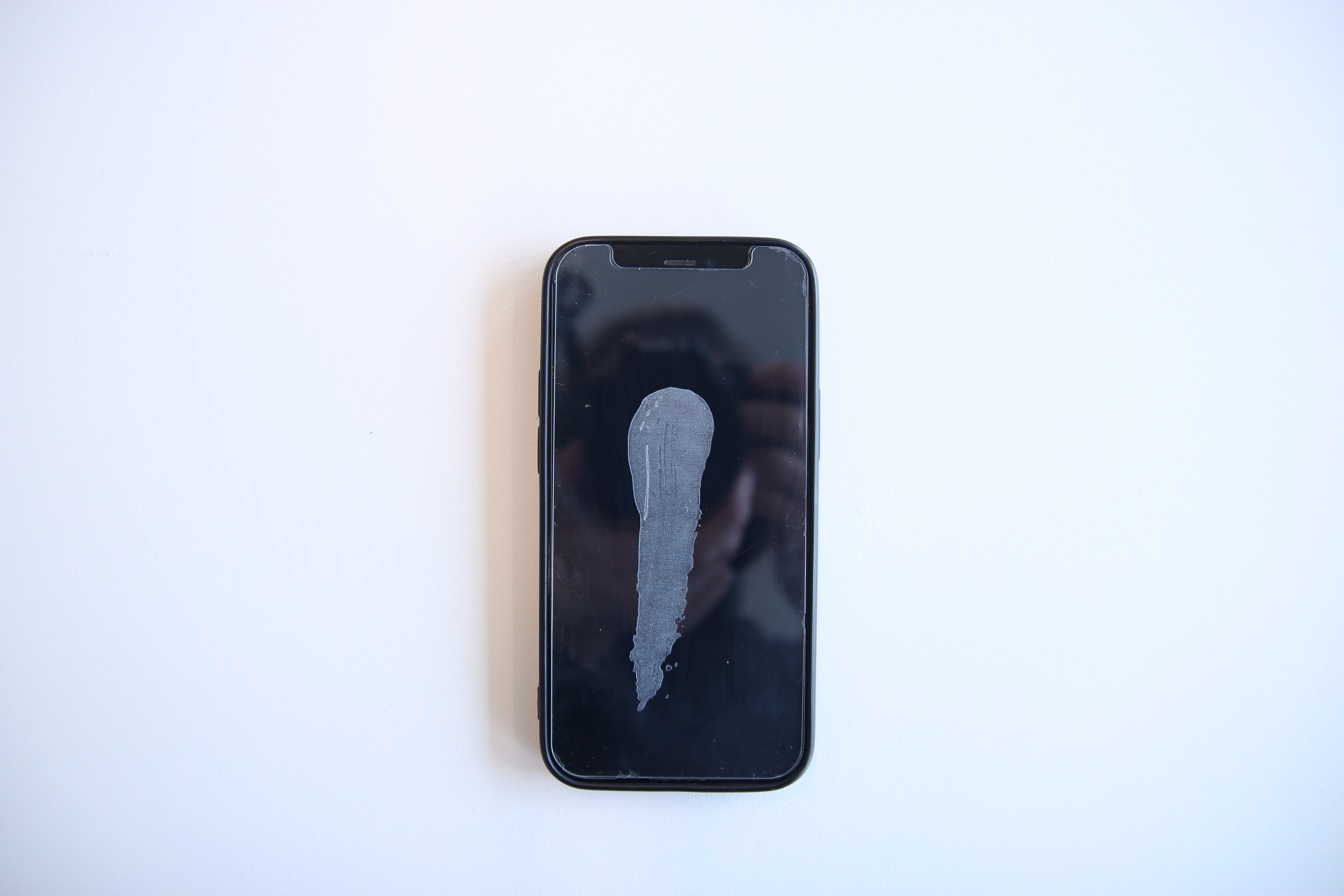
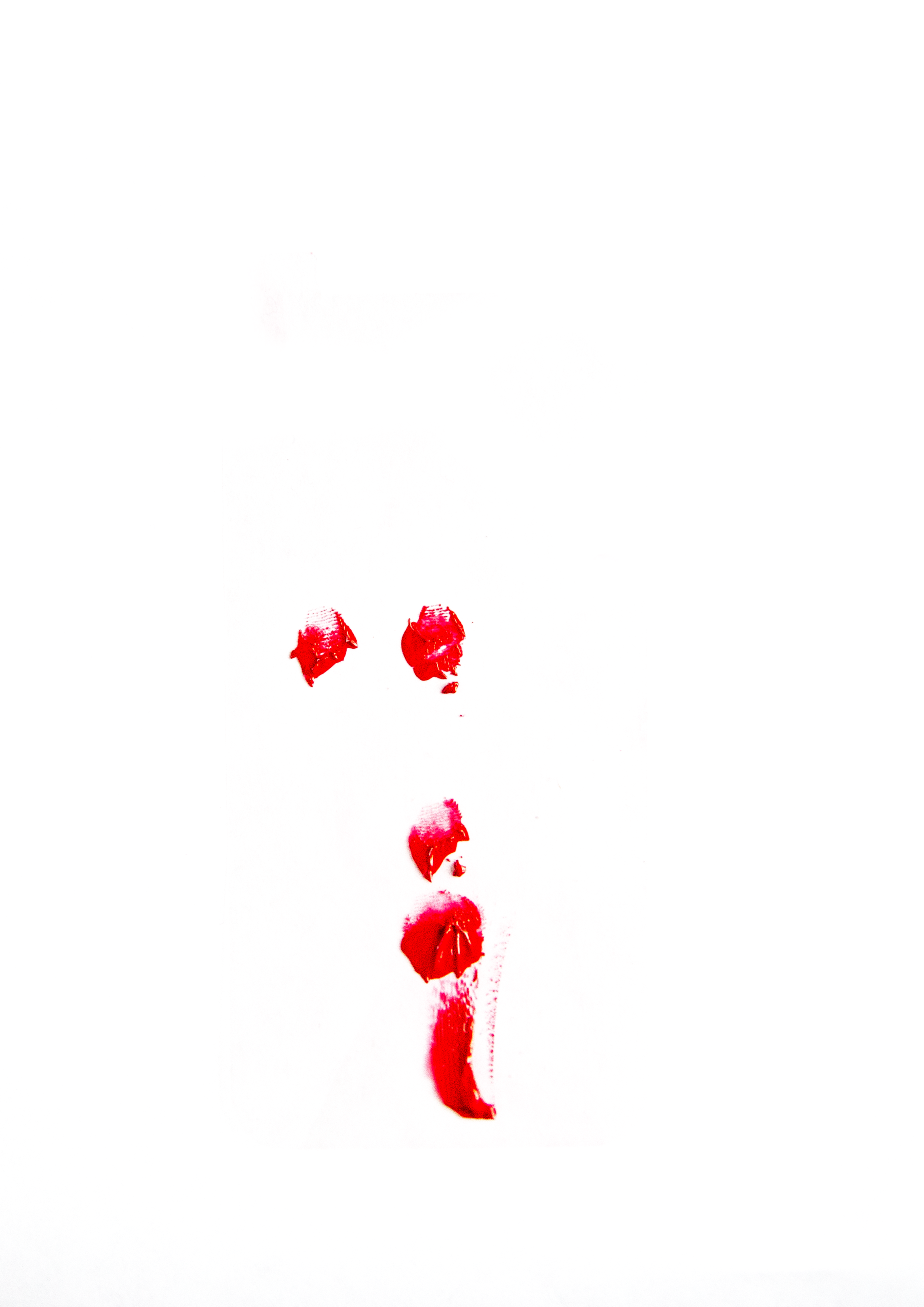
A relationship with a phone is very tactile and almost sensual. As a person who doesn’t like to be touched that much, the relationship with my phone is the most touchy-feely one I’ve ever had. You touch it, play it, stroke it, throw it away, and take it everywhere.
There is a strange power balance in that relationship. Who is the owner of the device? Is that me? Or am I the slave, since I cannot stop looking at the device and touching it, even though it’s just a bright light, a couple of pixels that, based on how I touch the device, evoke feelings and emotions.
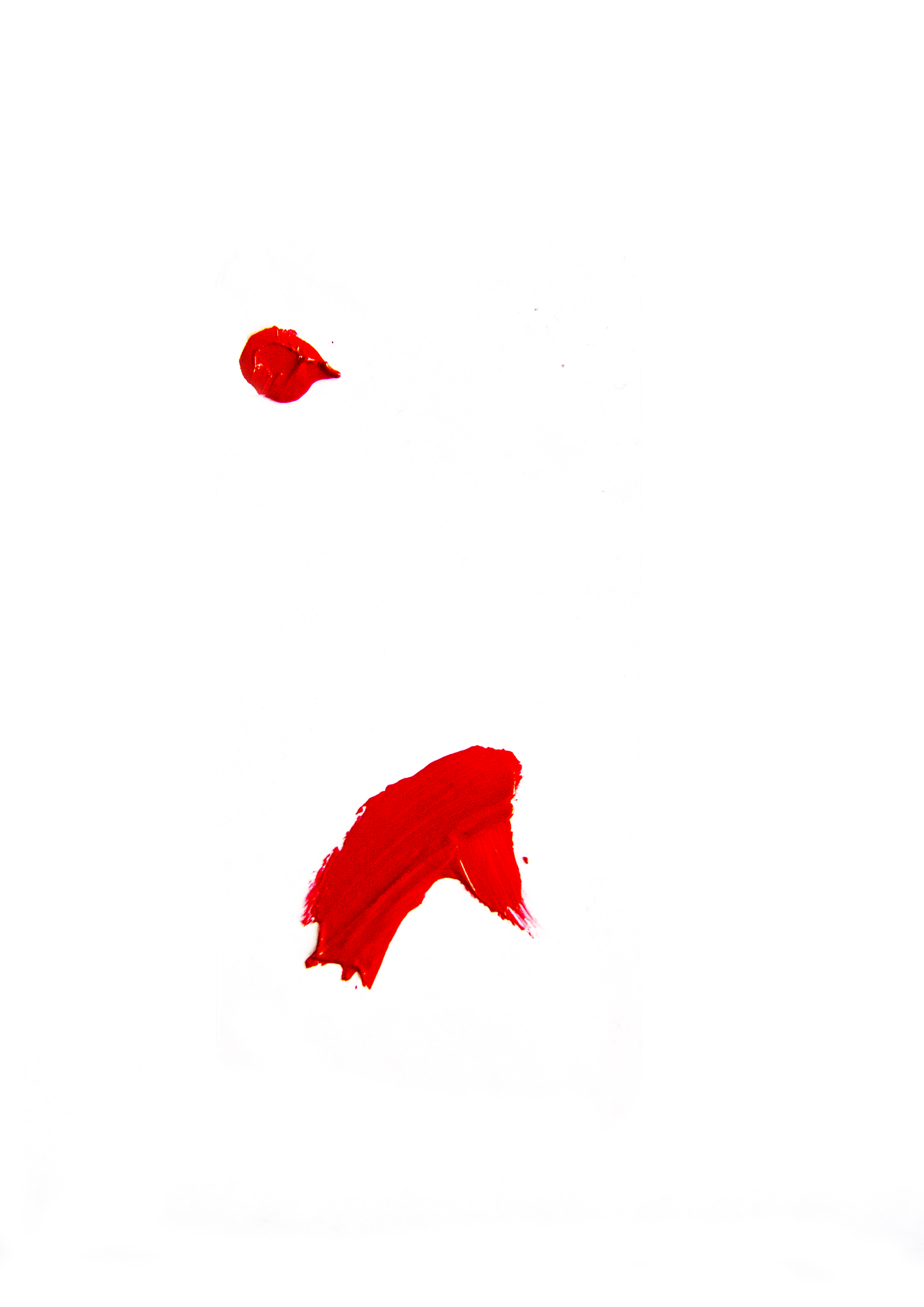
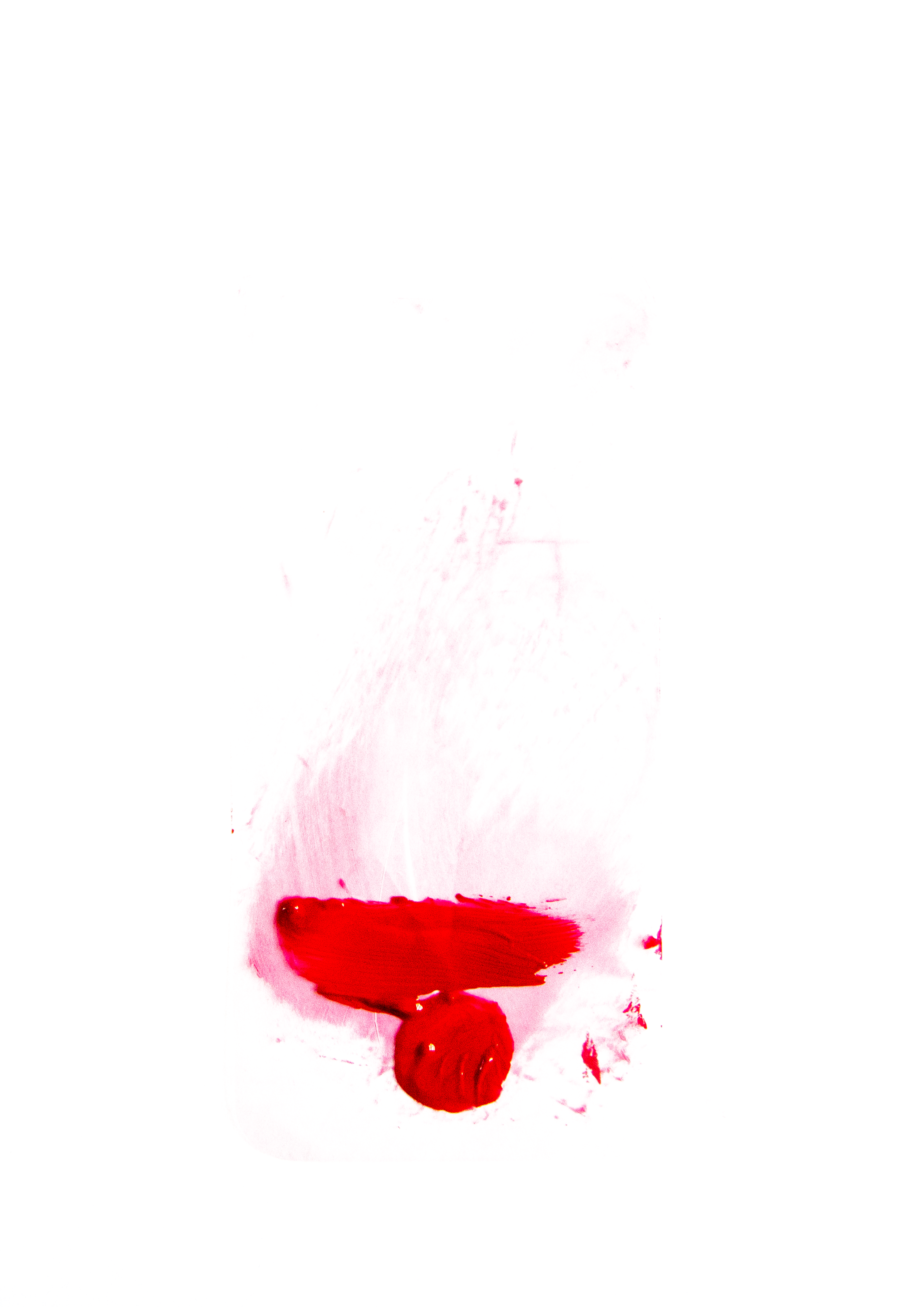
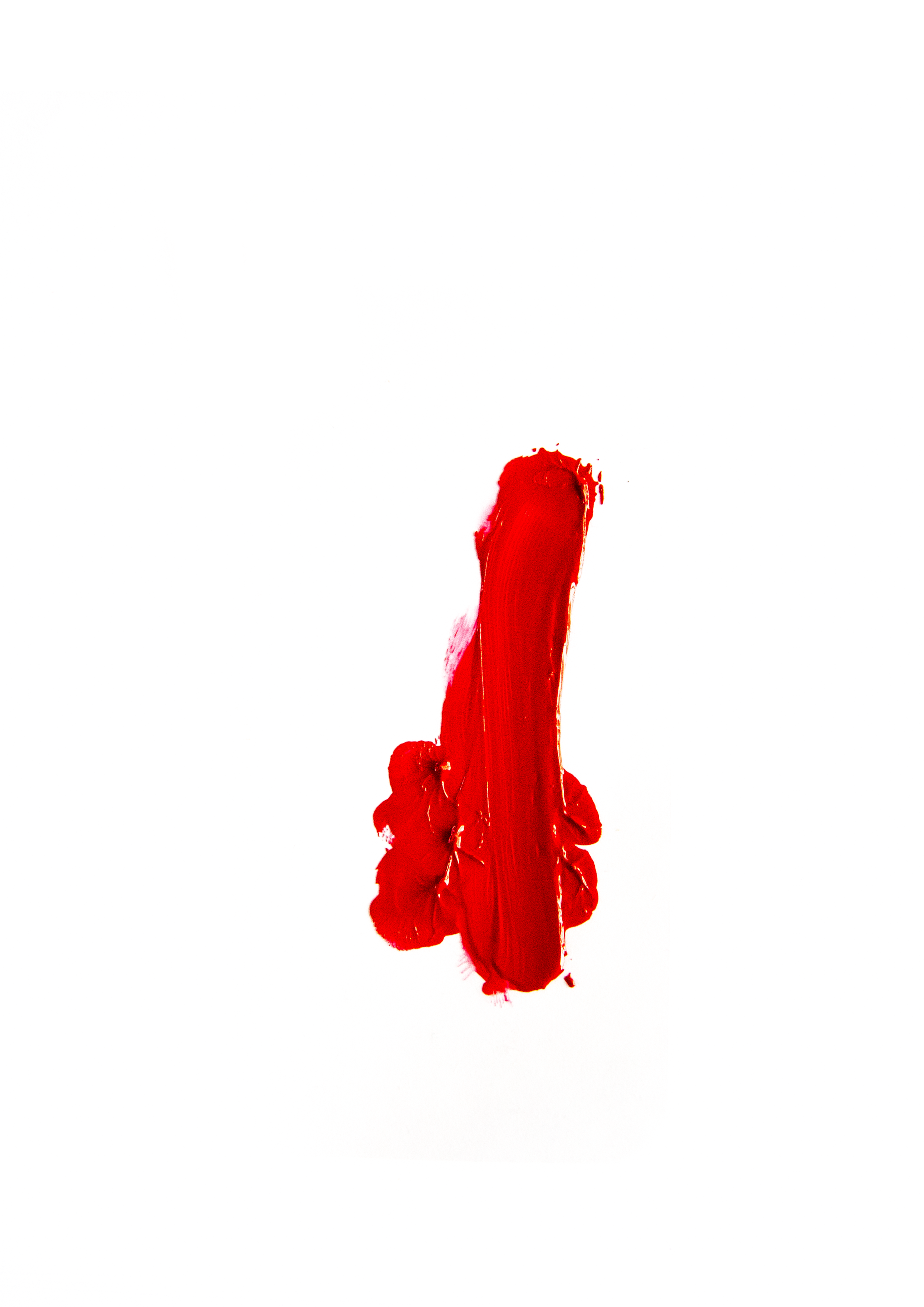
These are the 8 gestures performed on my 8 most used apps, translated into digital and visual outputs using code and Photoshop, and lasercut back into screen protectors, so we'll forever stay together.
.Files
-

001
001 -
002
002 -
003
003 -

004
004 -

005
005 -
006
006 -

007
007 -
008
008
The Phone Orchestra
in 2022 using USB Phones, TouchDesigner
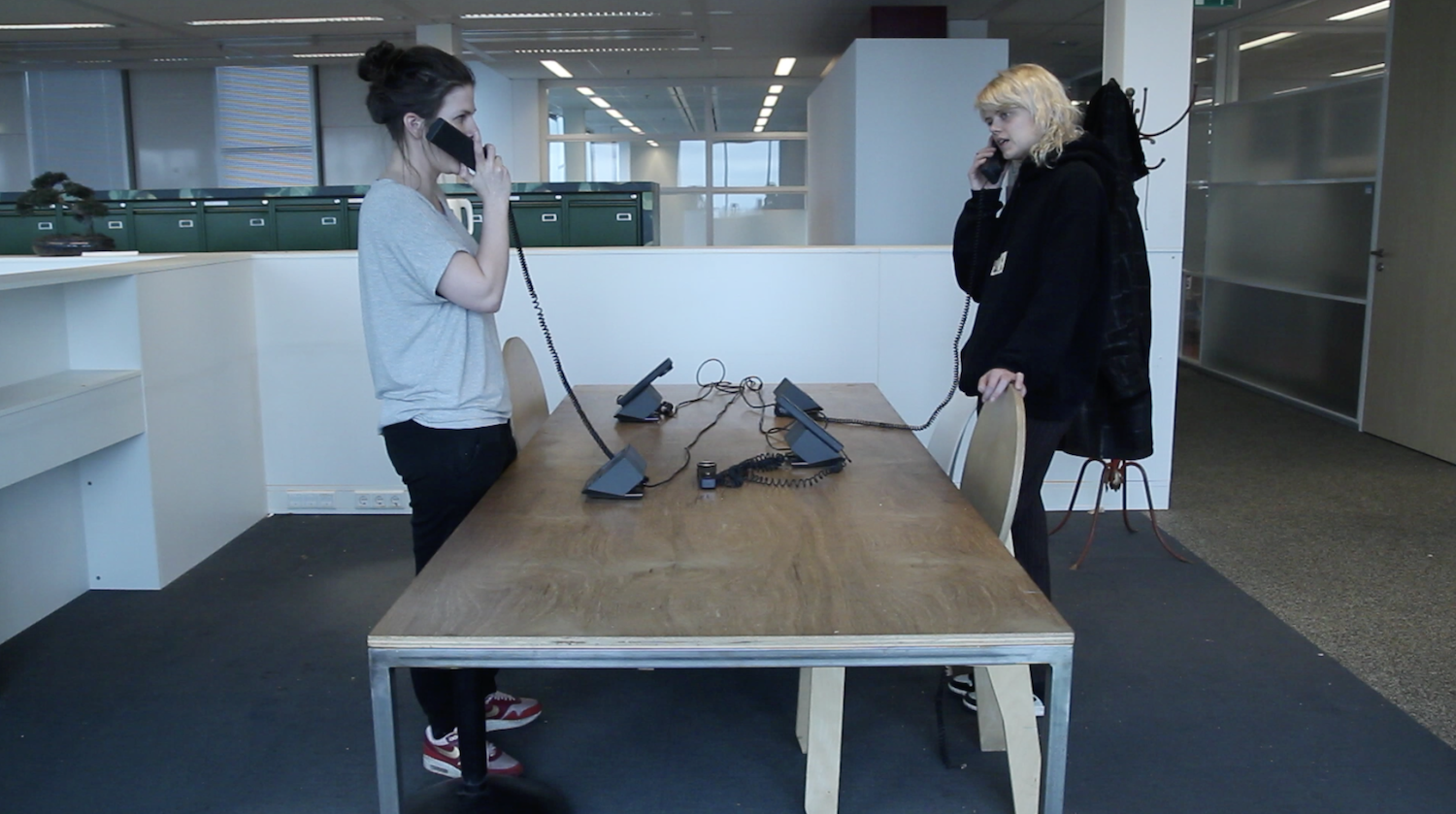
This small, closed network results in a self-oscillating orchestra. The phones are interconnected. One microphone is connected to another phone's speaker and vice versa. The microphone's input is transformed into a frequency and blasted through the room via the phone's onboard speaker. Ofcourse, this sound is picked up by another microphone again, and, depending on the distance between the devices, a feedback loop is created and the self-repeating orchestra starts to play.
Due to financial limitations, the Orchestra has limited seating. Only 7 participants are able to perform together. In the future, this can, in theory, be scaled up to 52 phones.
Vitrinekast Soundsystem
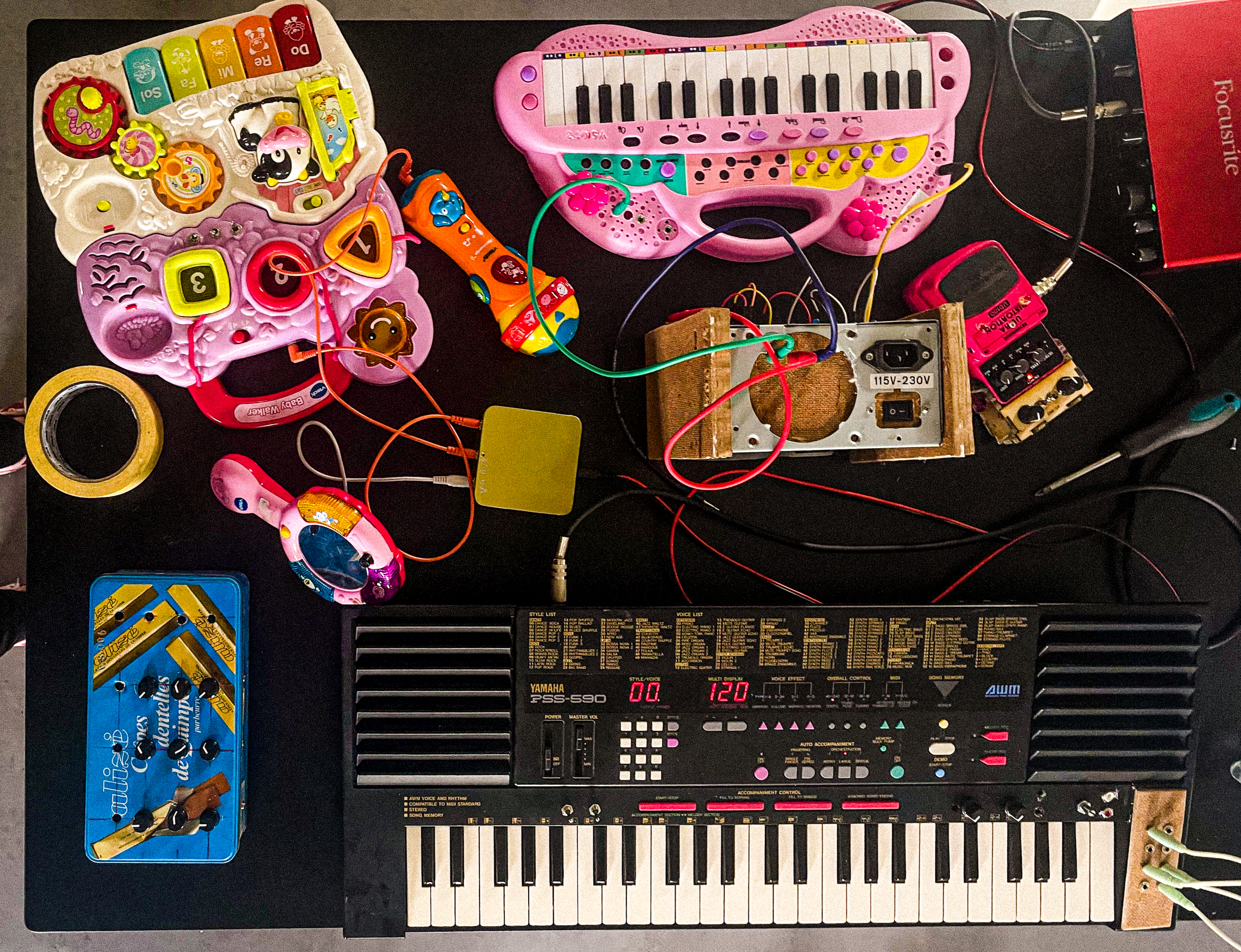
The Vitrinekast Soundsystem is an ongoing series of instruments and or audio modifiers. Some are circuit-bent, and others are made from scratch. I use the Vitrinekast Soundsystem as a vehicle to continue my research towards mathematical structures, voltages, circuit bending, electronics, making, breaking, hacking, noise, pop music structures, performance (without performing), feedback loops, noise again, DIY culture, machines, etc. etc. etc.
I've always been very passionate about music, and with my history and background in making products and tools, making instruments is an interesting new perspective.
Below is an overview of all devices currently part of the Vitrinekast Soundsystem collection.
Overview of instruments
| Name | Description | Links |
|---|---|---|
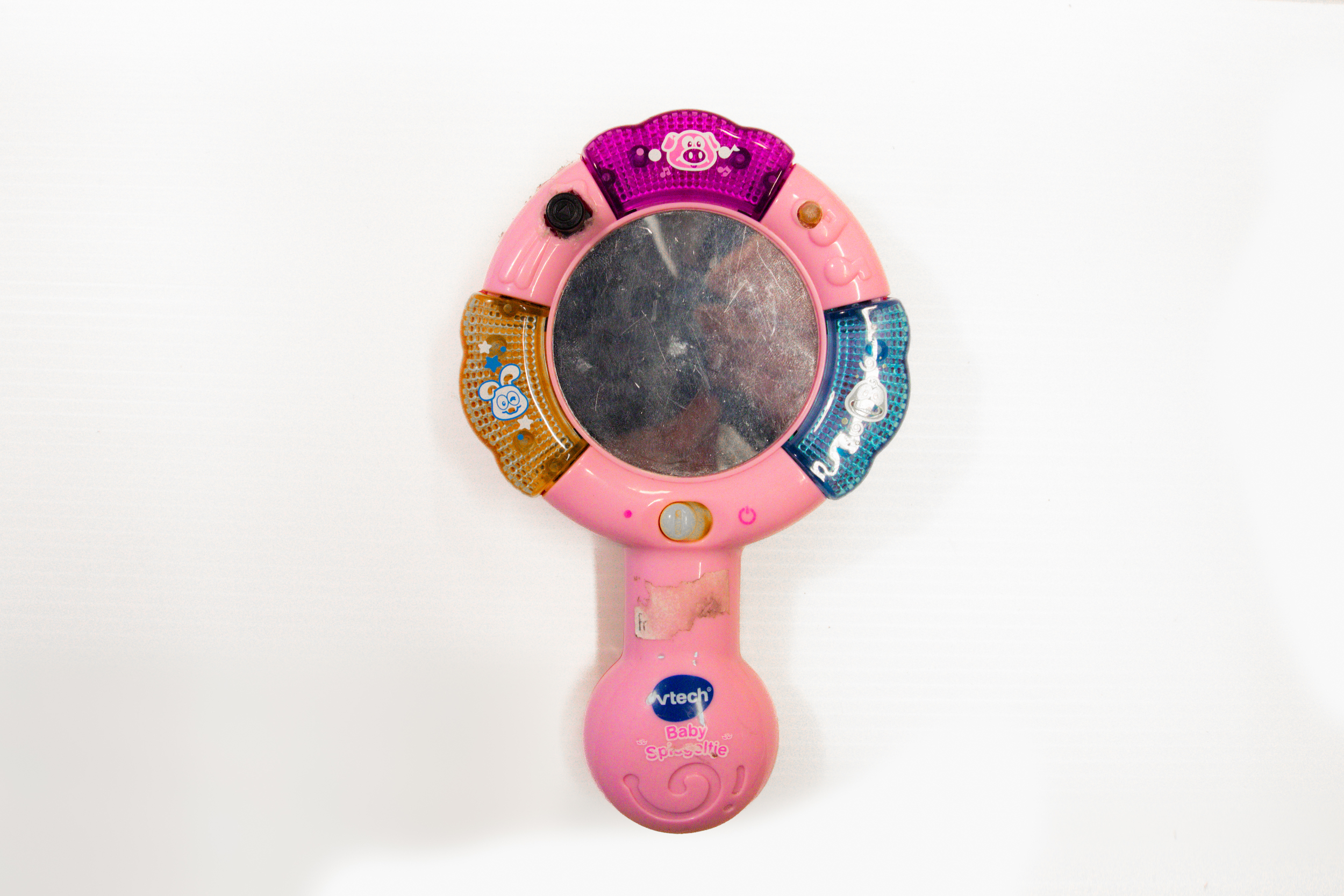
| VS-000 | Audio Source. "Spiegeltje Spiegeltje aan de wand" Distorted toy | SamplePack |
| VS-001 | Audio Source. Casio keyboard with a patchbay. Midi enabled | SamplePack |
| VS-002 | Audio source. This book toy now has an audio out | SamplePack |
| VS-003 | Audio Source. Drumcomputer if combined with VS-SEQ01 | - |
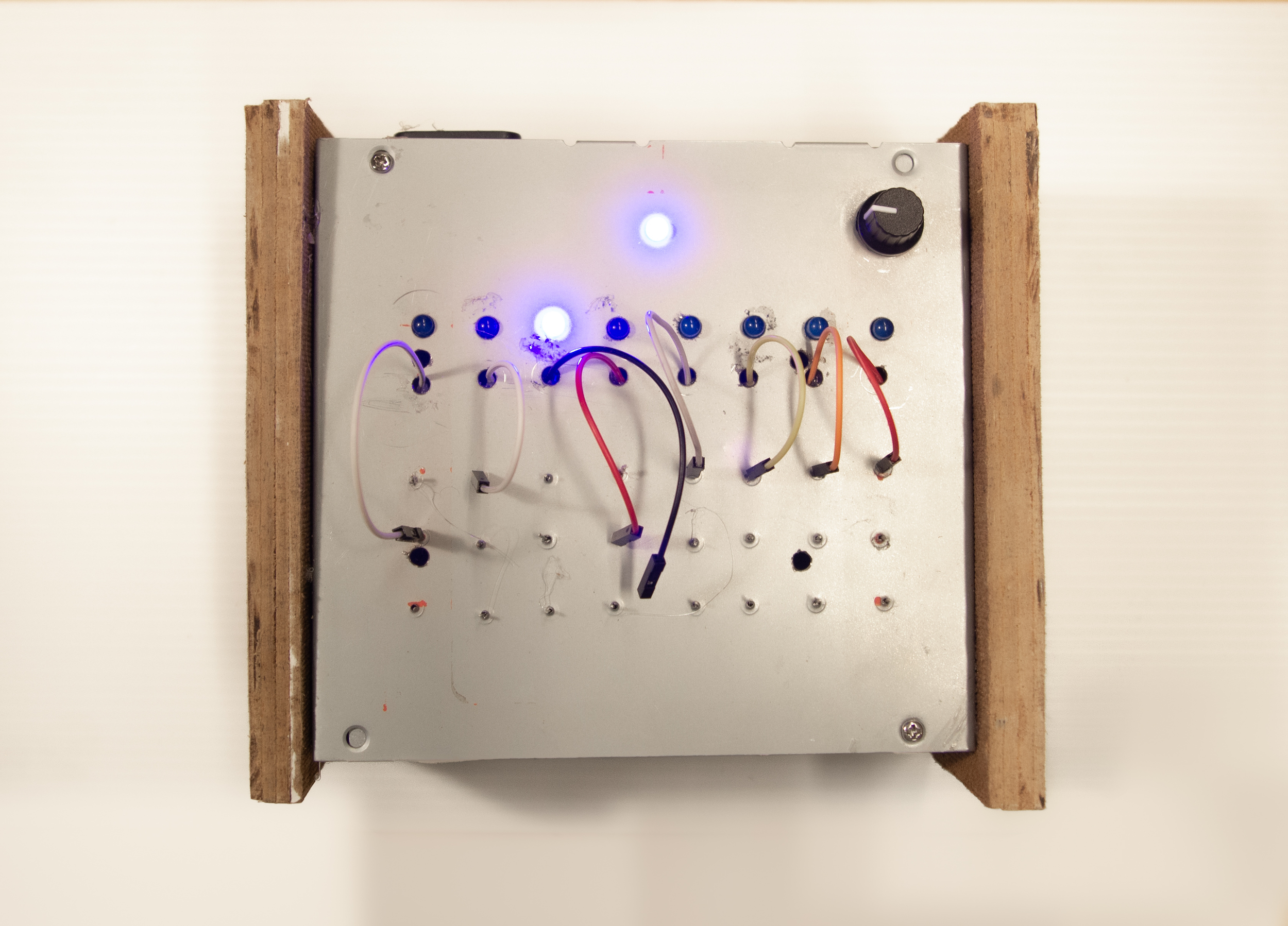
| VS-SEQ01 | Trigger. Custom built Baby 8 Sequencer. Battery powered and (sort of) CV-out | - |
| VS-004 | Audio modifier/Modified distortion pedal | SamplePack |
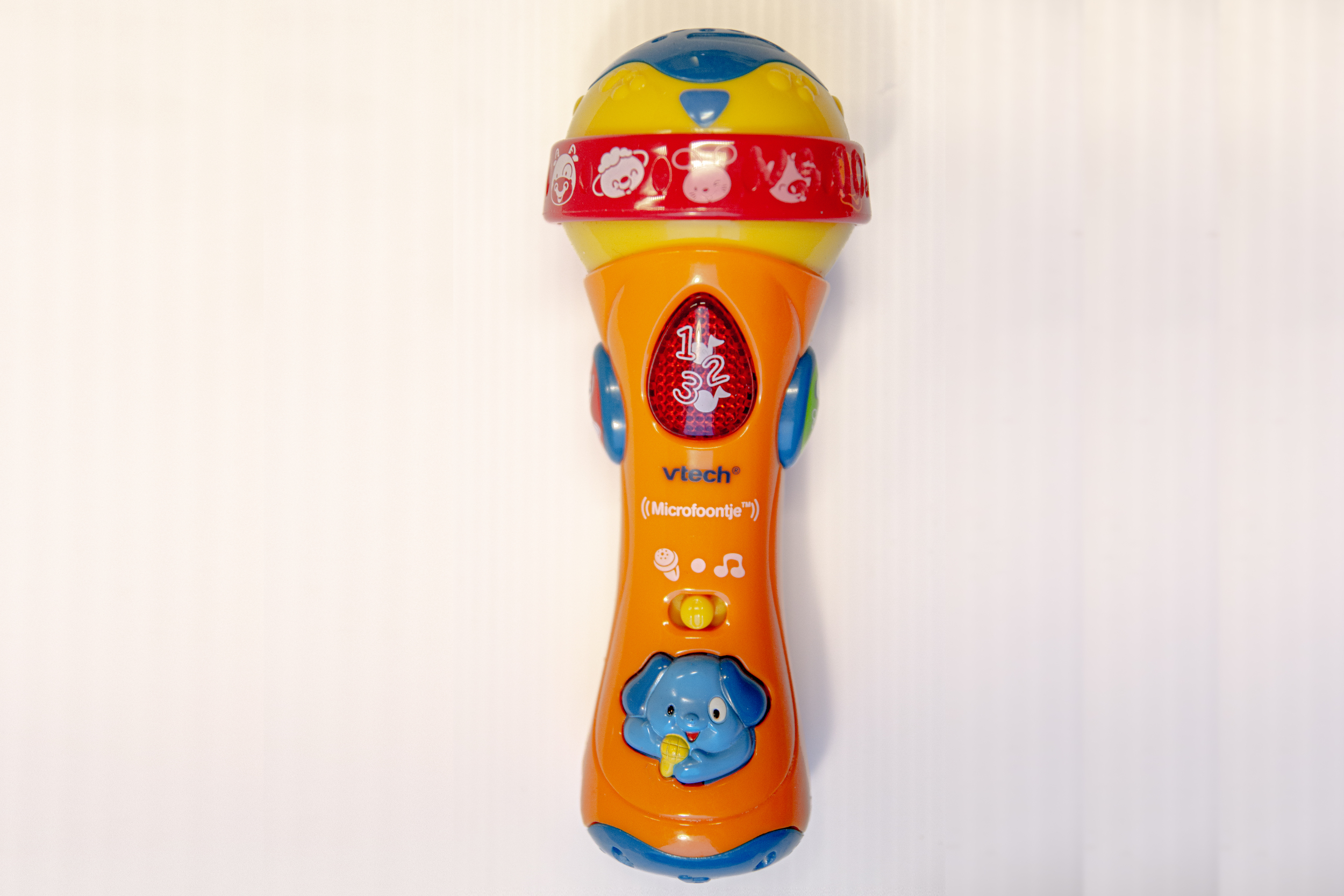
| VS-005 | Microphone with audio out and signal modifiers | - |
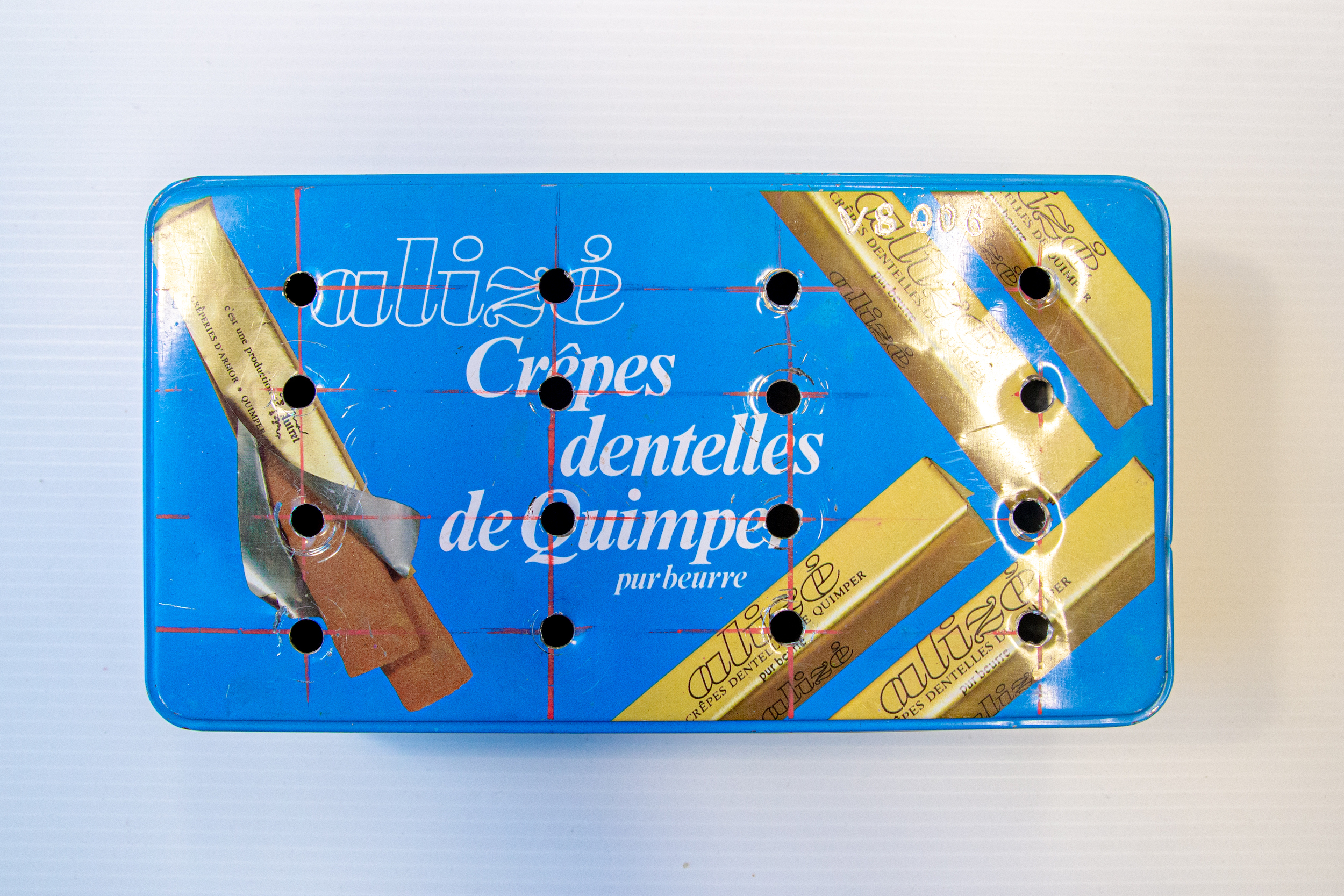
| VS-006 | Matrix mixer (one gigantic glitch) | - |
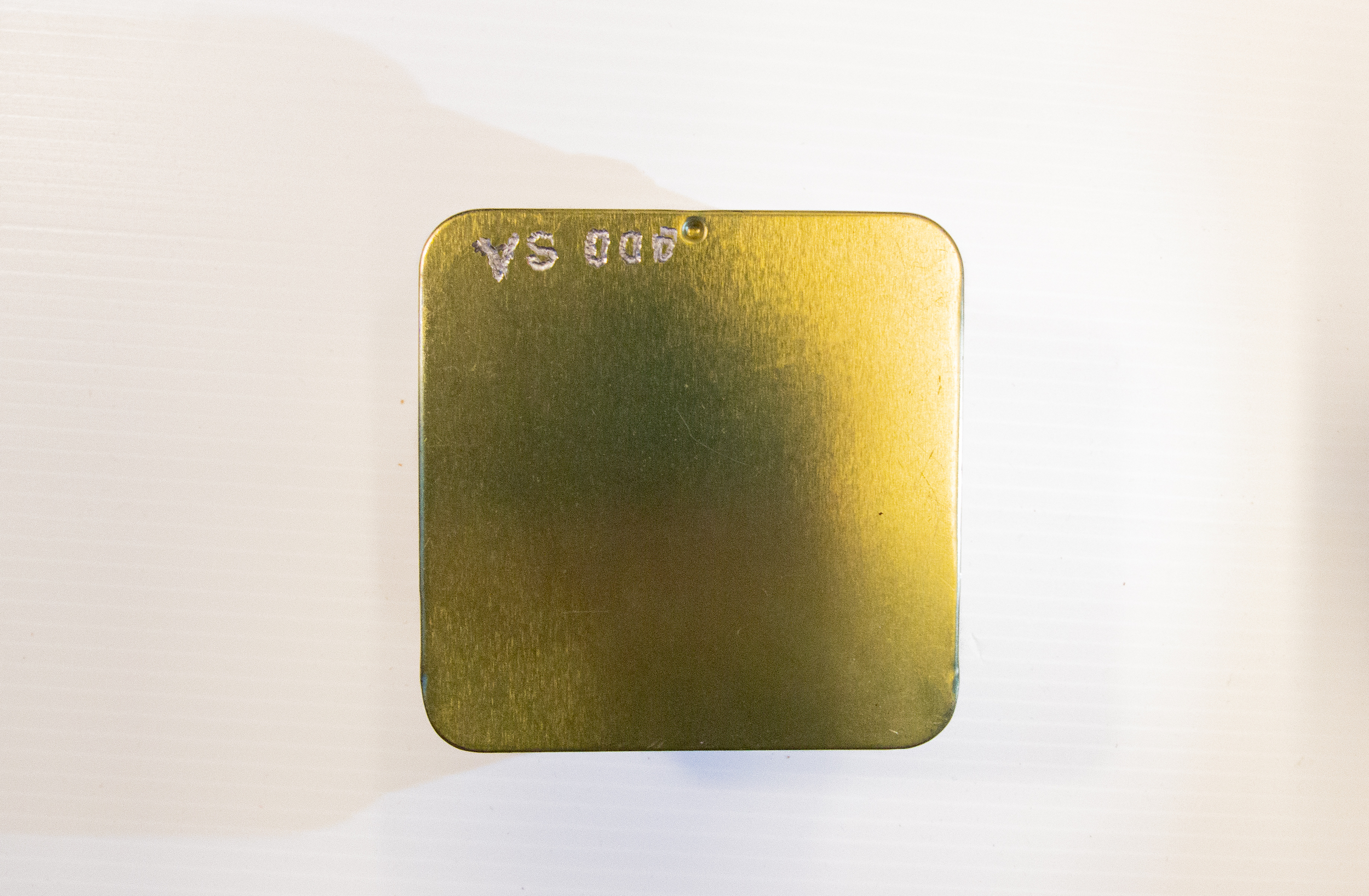
| VS-007 | 2 Channel merger | - |
| VS-008 | AM Radio noise looping system | - |
| VS-009 | Remake of VS-006 | - |
| VS-011 | DJ Replacement system | Documentation |
| VS-014 | Digital Analog Tape Delay. | Documentation |
Notes
-
VS-011 was a major release and holds its own page within this document.
-
Based on VS-000, VS-001, VS-002, and VS-004, 2 sample packs have been released on bandcamp .
.Files
-
VS-000
VS-000 -
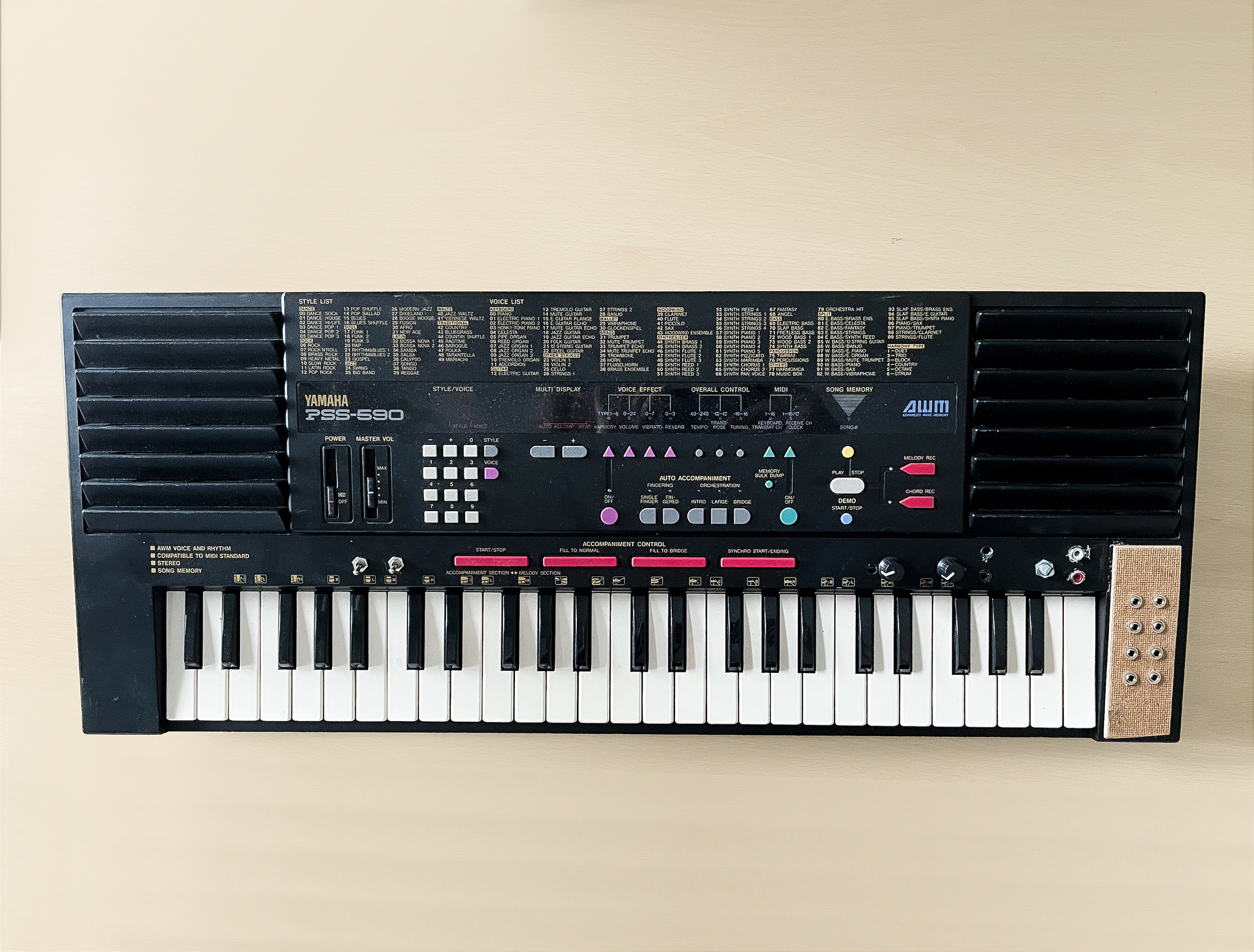
VS-001
VS-001 -
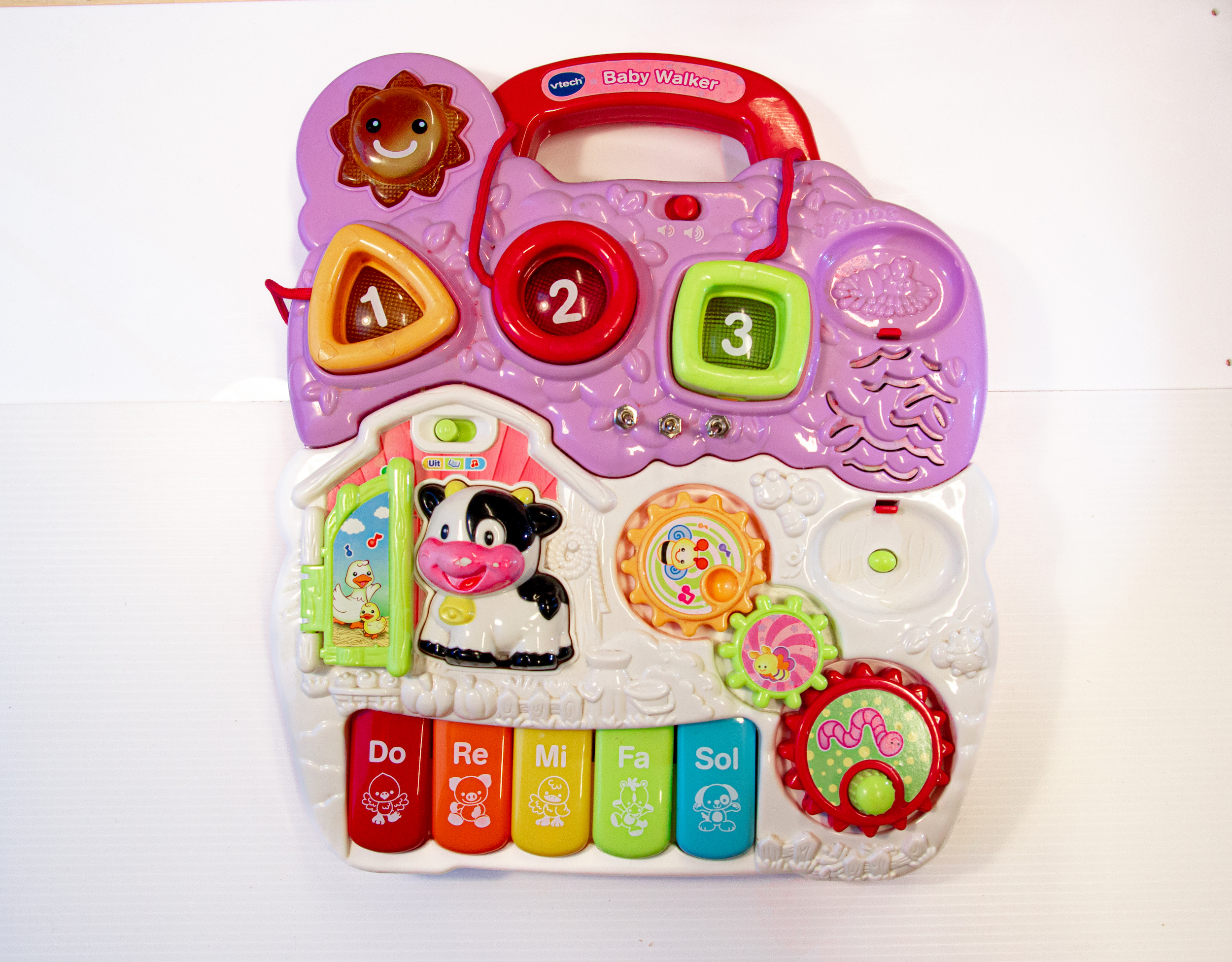
VS-002
VS-002 -
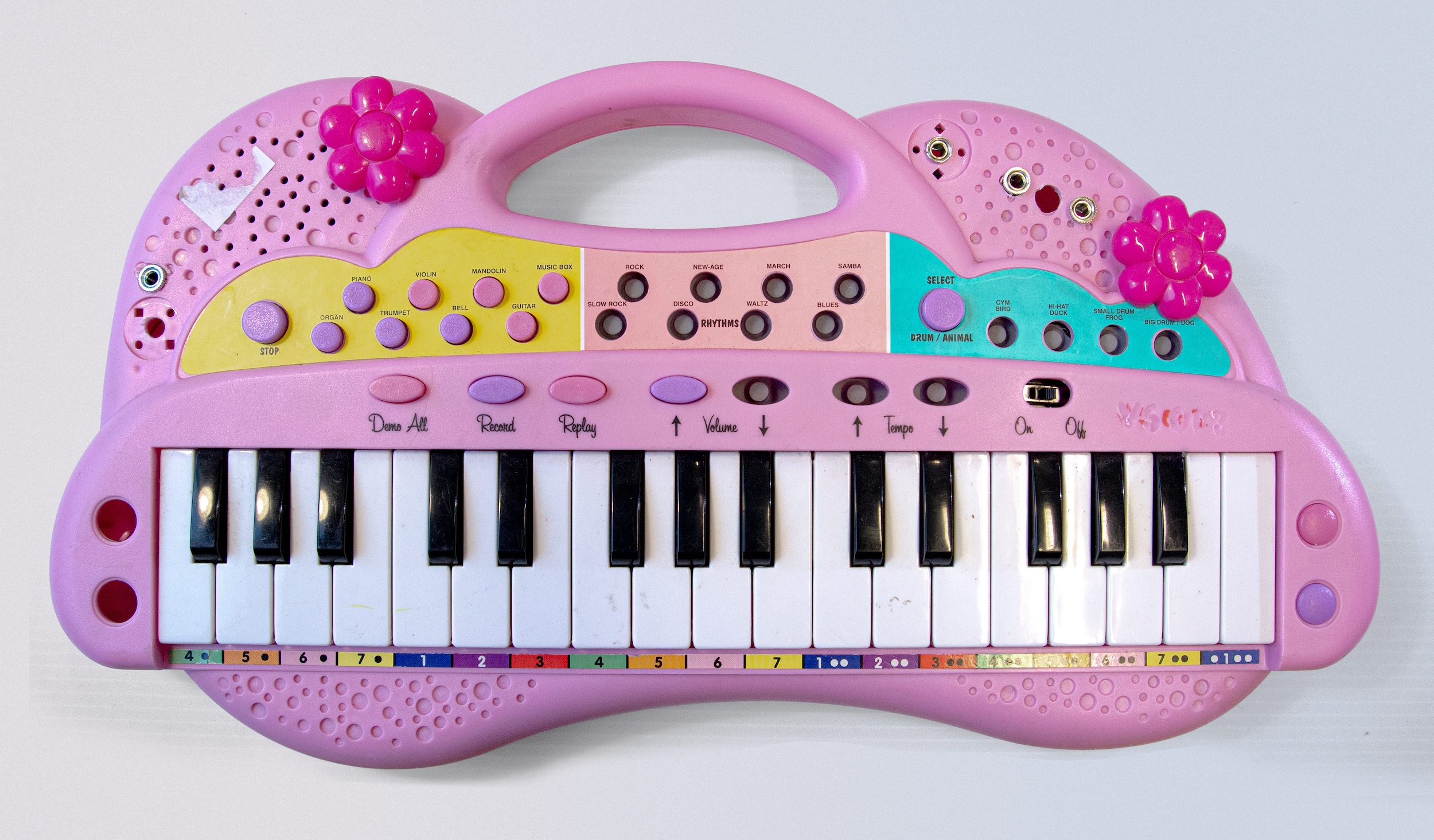
VS-003
VS-003 -
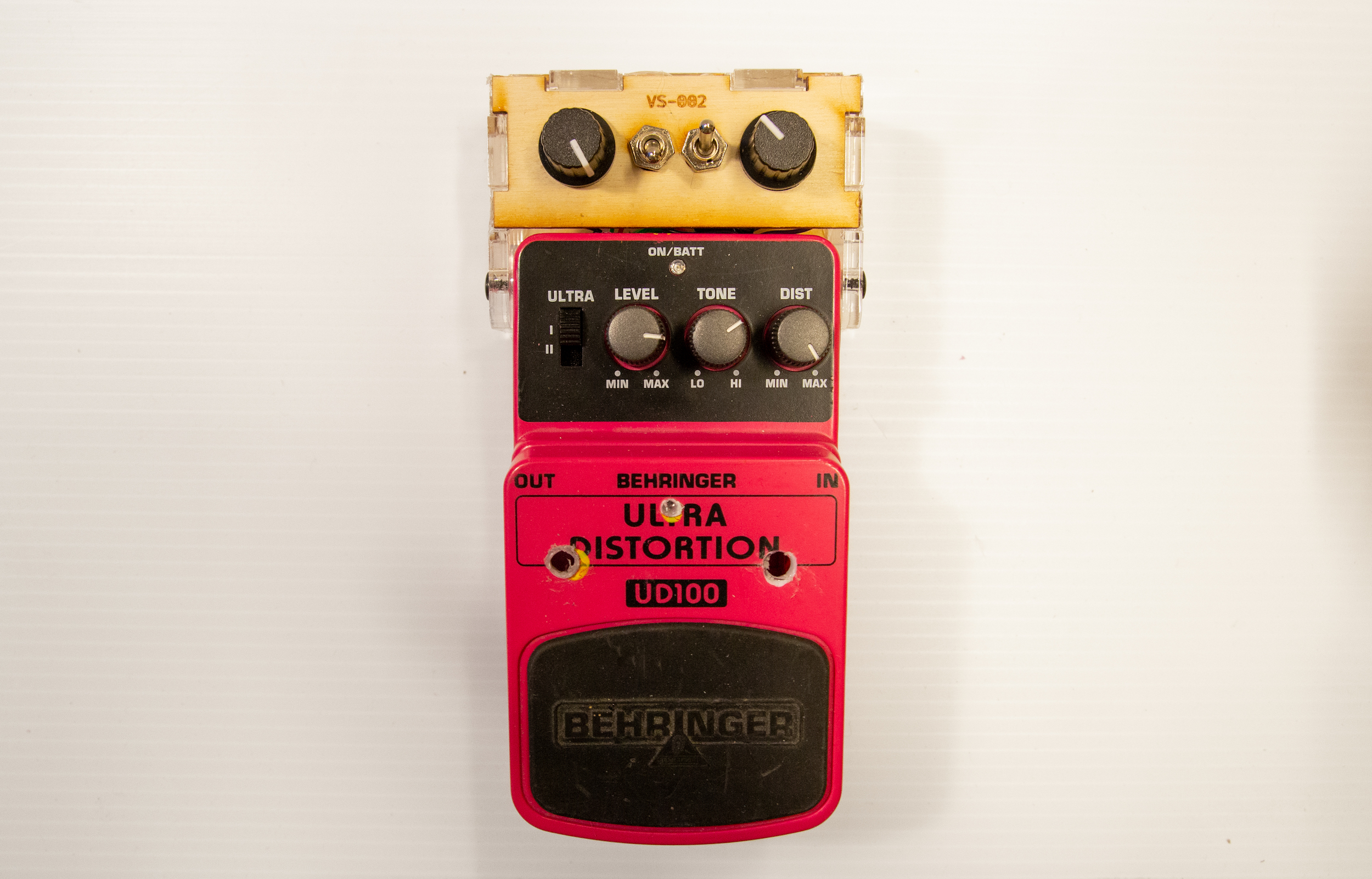
VS-004
VS-004 -
VS-SEQ01
VS-SEQ01 -
VS-005
VS-005 -
VS-006
VS-006 -
VS-007
VS-007 -
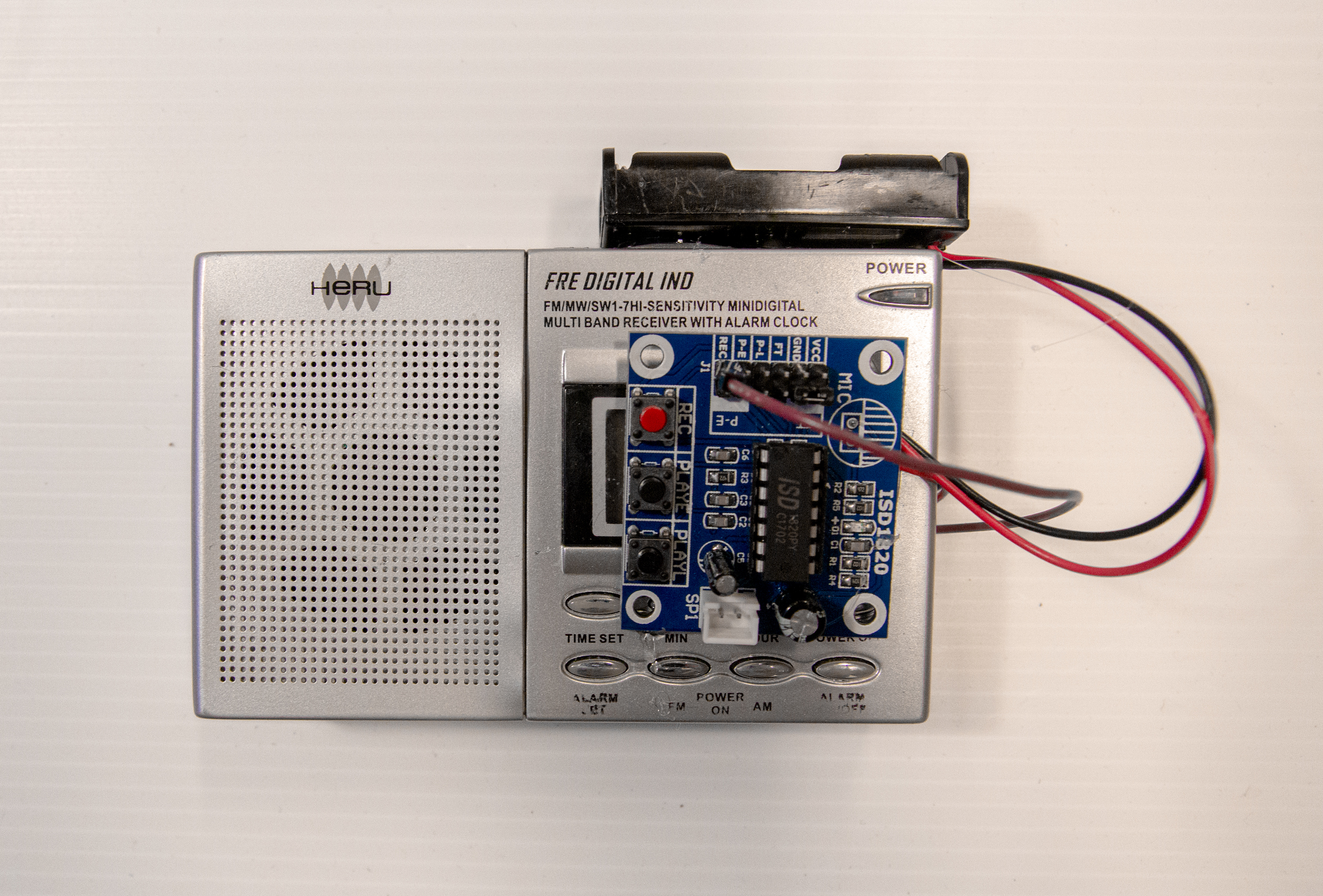
VS-008
VS-008 -
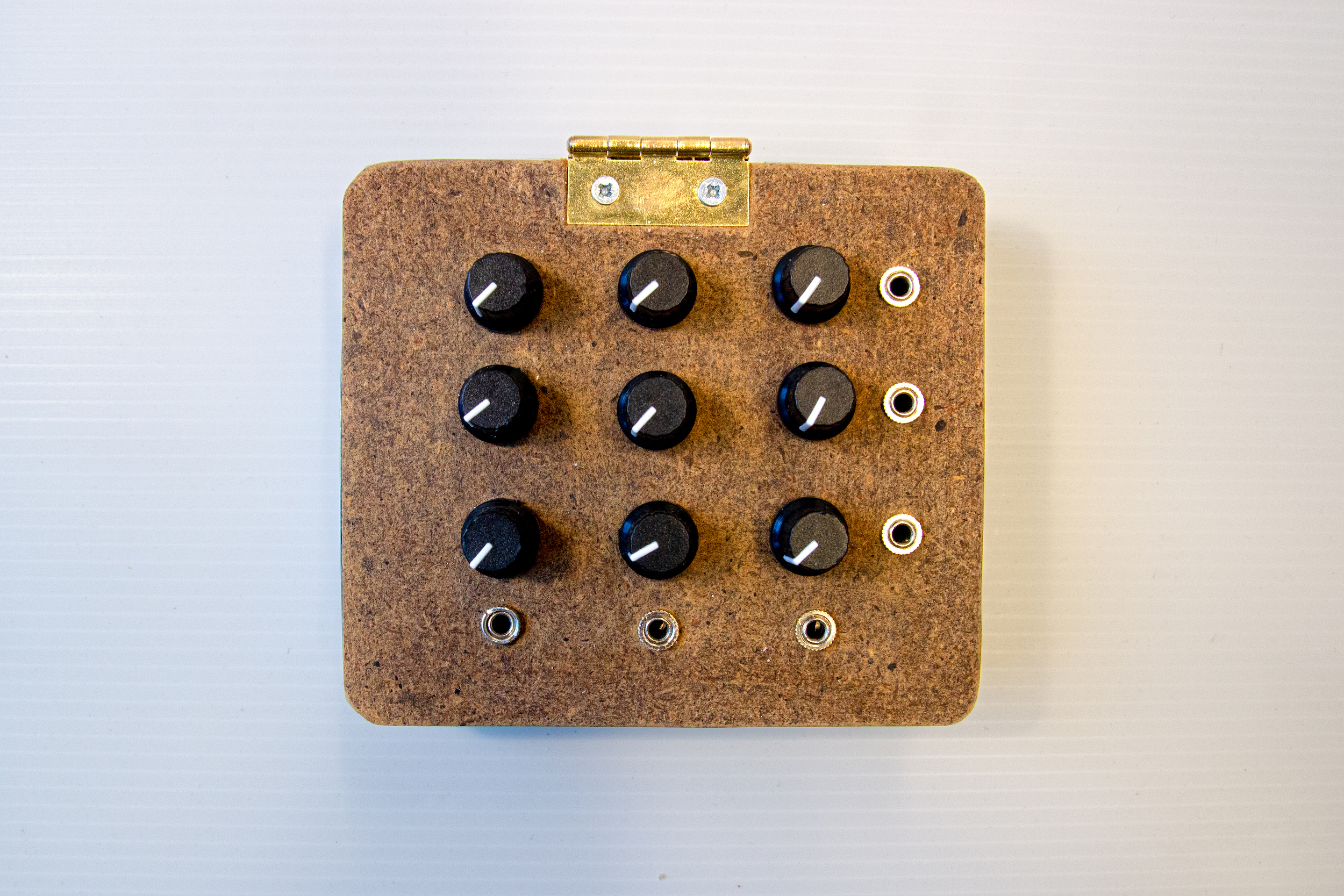
VS-009
VS-009 -
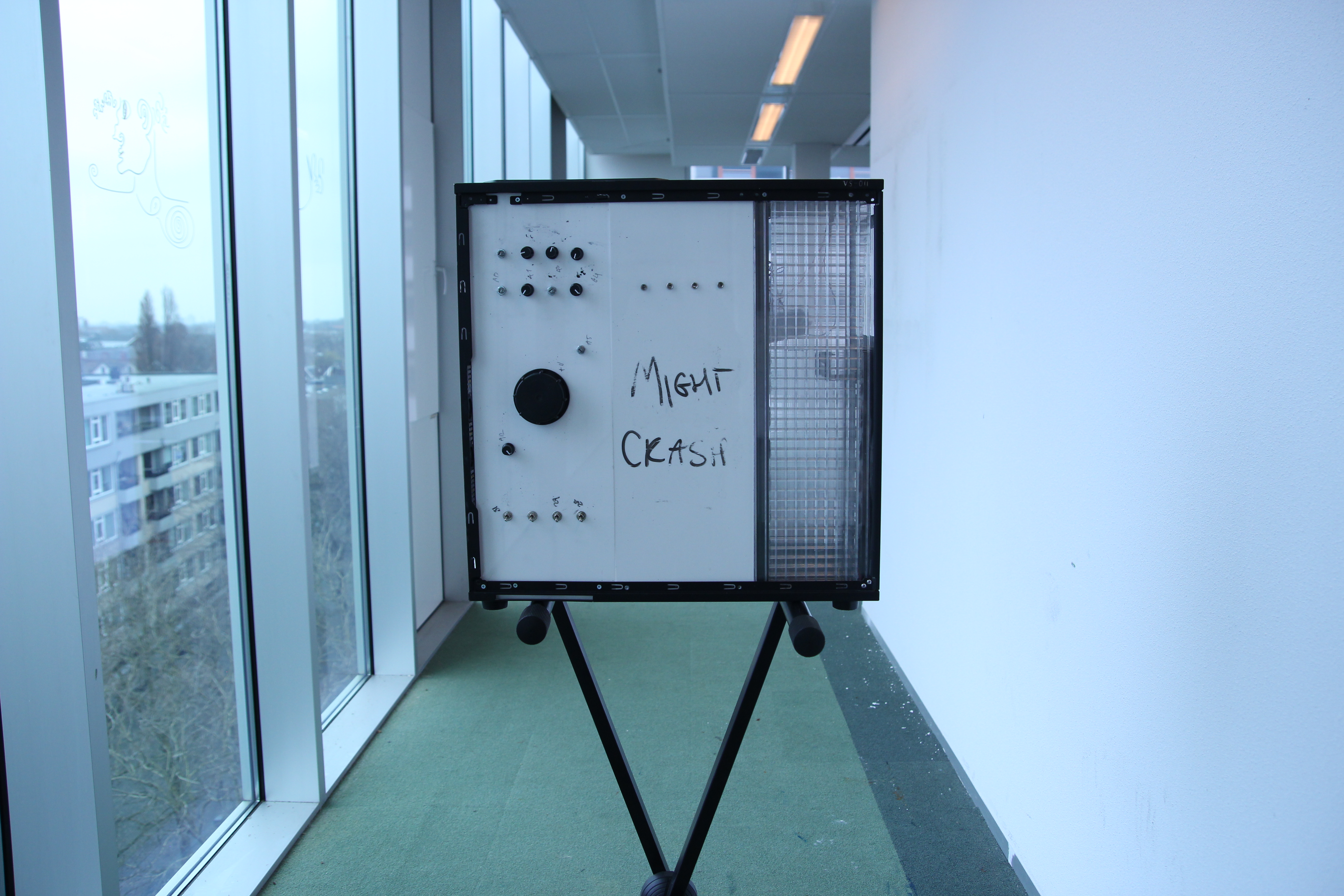
VS-011
VS-011 -
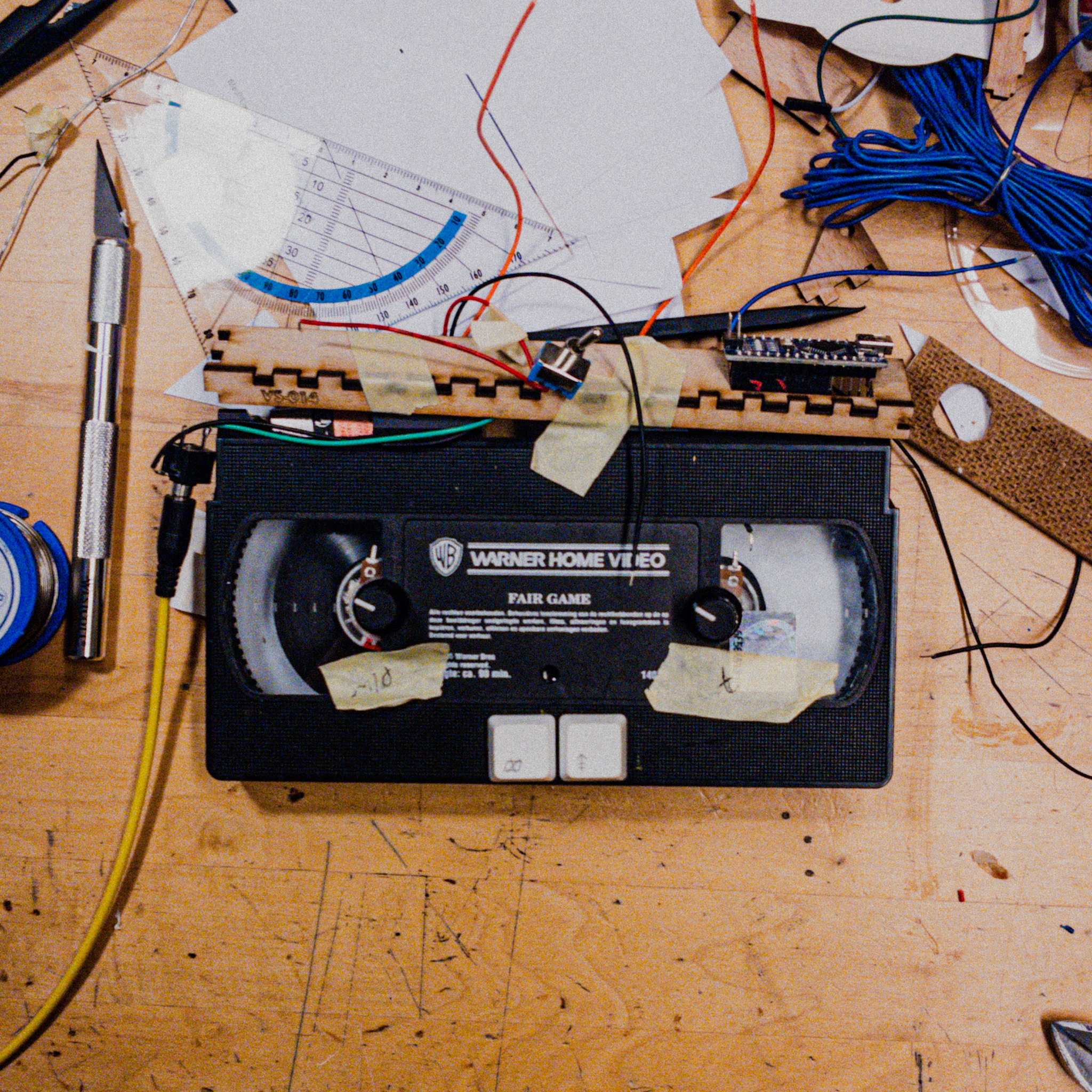
VS-014
VS-014
VS-011: Might Crash Machine
using Found Material, PureData, Teensy
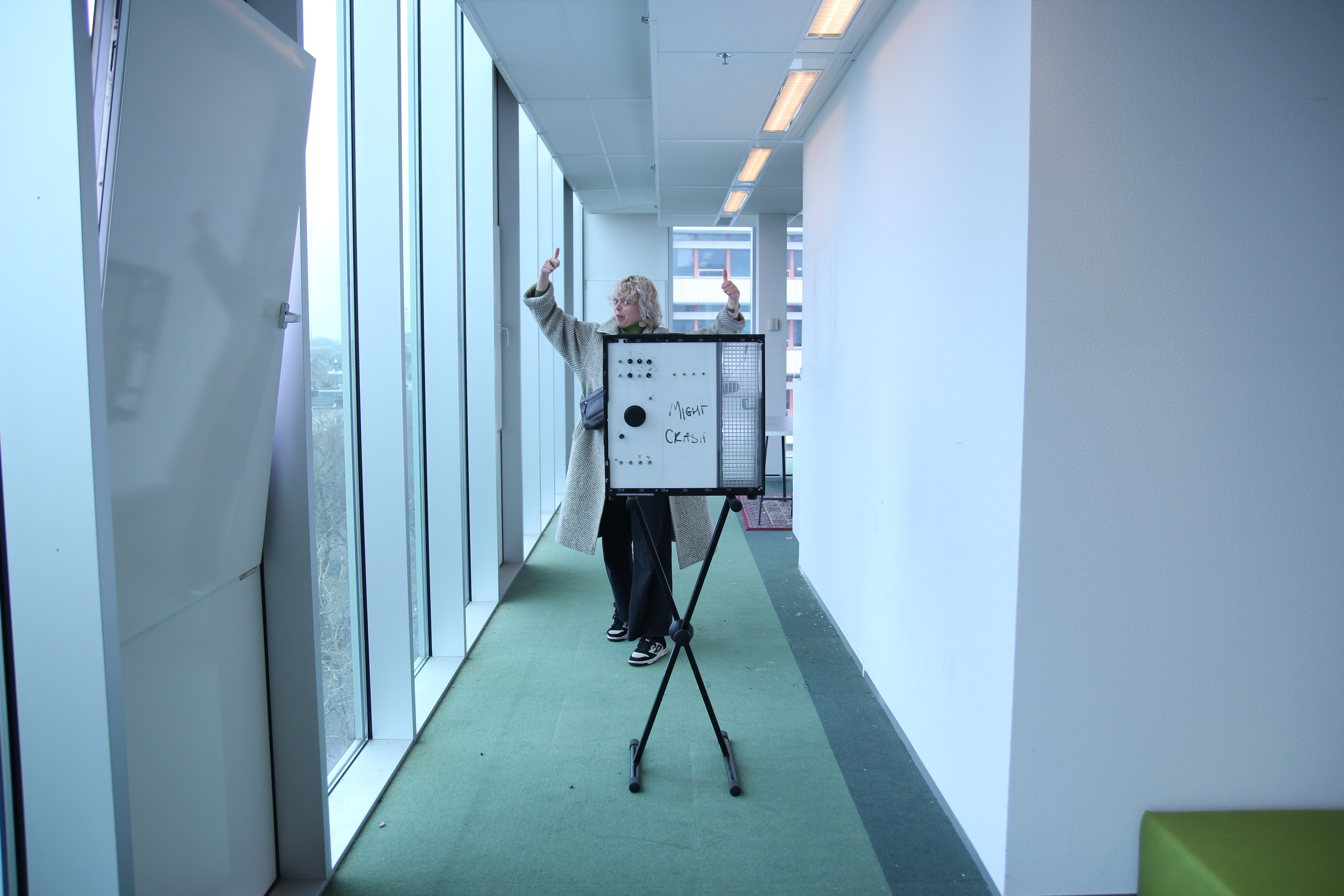
The VS-011 is my first digital hardware synth where I try to replace a conventional producer/DJ in a club setting. Via the keypad on the left, you can enter a 6-digit seed. This acts as the input for the (un)written rules about the structure and sound design of western Electronic Dance Music, and starts the in real-time generated audio performance. After 5 minutes, a human needs to enter a new sequence to keep the party going.
The relationship between math (in its broadest sense) and music is something that has interested me for the past 10+ years. First initiated by a High School graduation project where I wanted to abstract classical music into a single mathematical formula (an ambition that's still there).
For VS-011 I focussed on structures, musical notations using computers, and generative music in the 60's (inspired by Bell Studios and the BBC Radiophonic Workshop). One of the structures for the VS-011 is shown below in a spreadsheet. The machine is made out of existing materials, such as a 2005 Apple Magic Keyboard. This keyboard is later also used for the VS-014
The project is documented further on Github
To make the audio-performance-research project complete, I've also started a new DJ career (bookings@vitrinekast.xyz), exclusively performing at Female/Queer skate festivals.
.Files
-
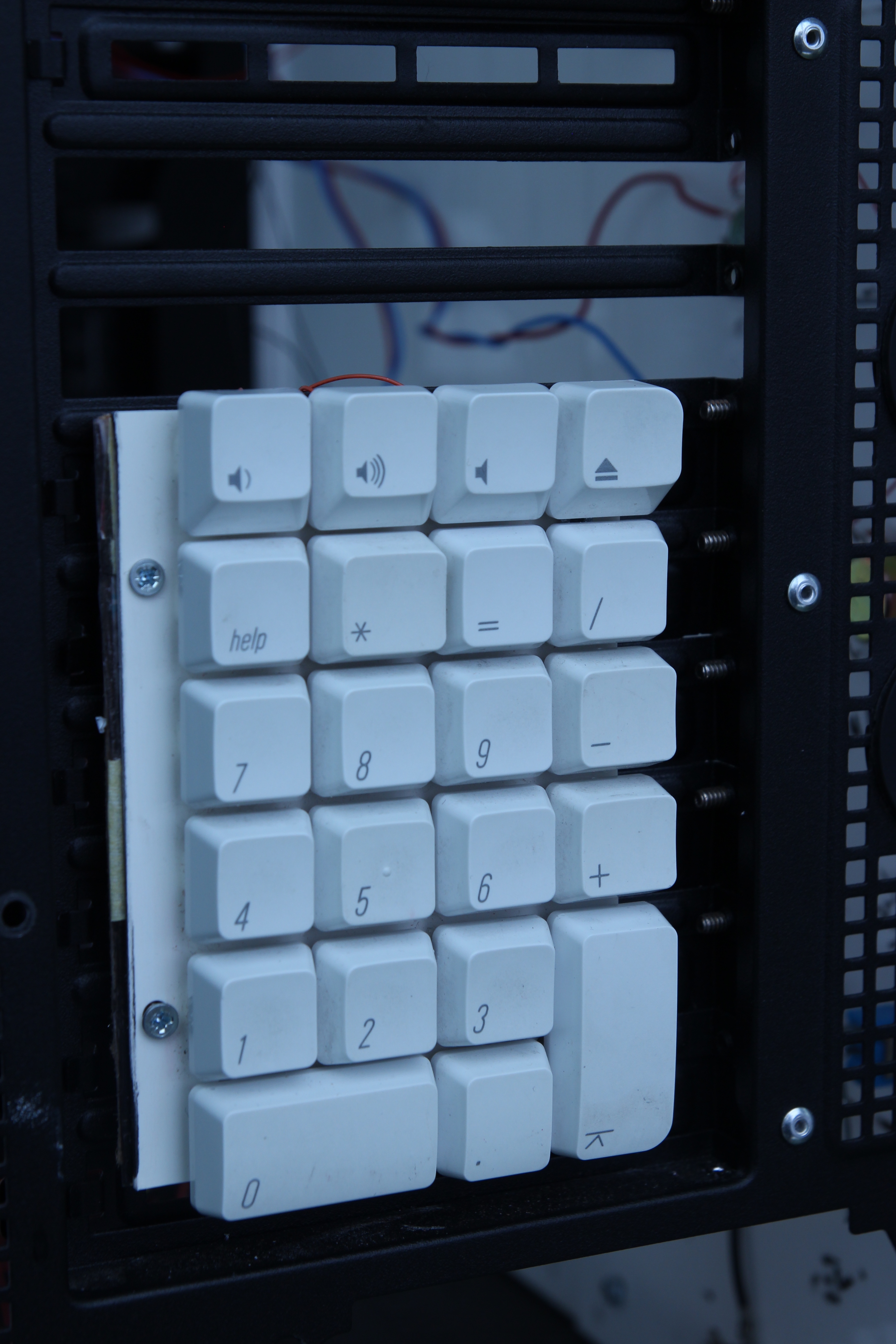
Keypad to enter the seed
Keypad to enter the seed -
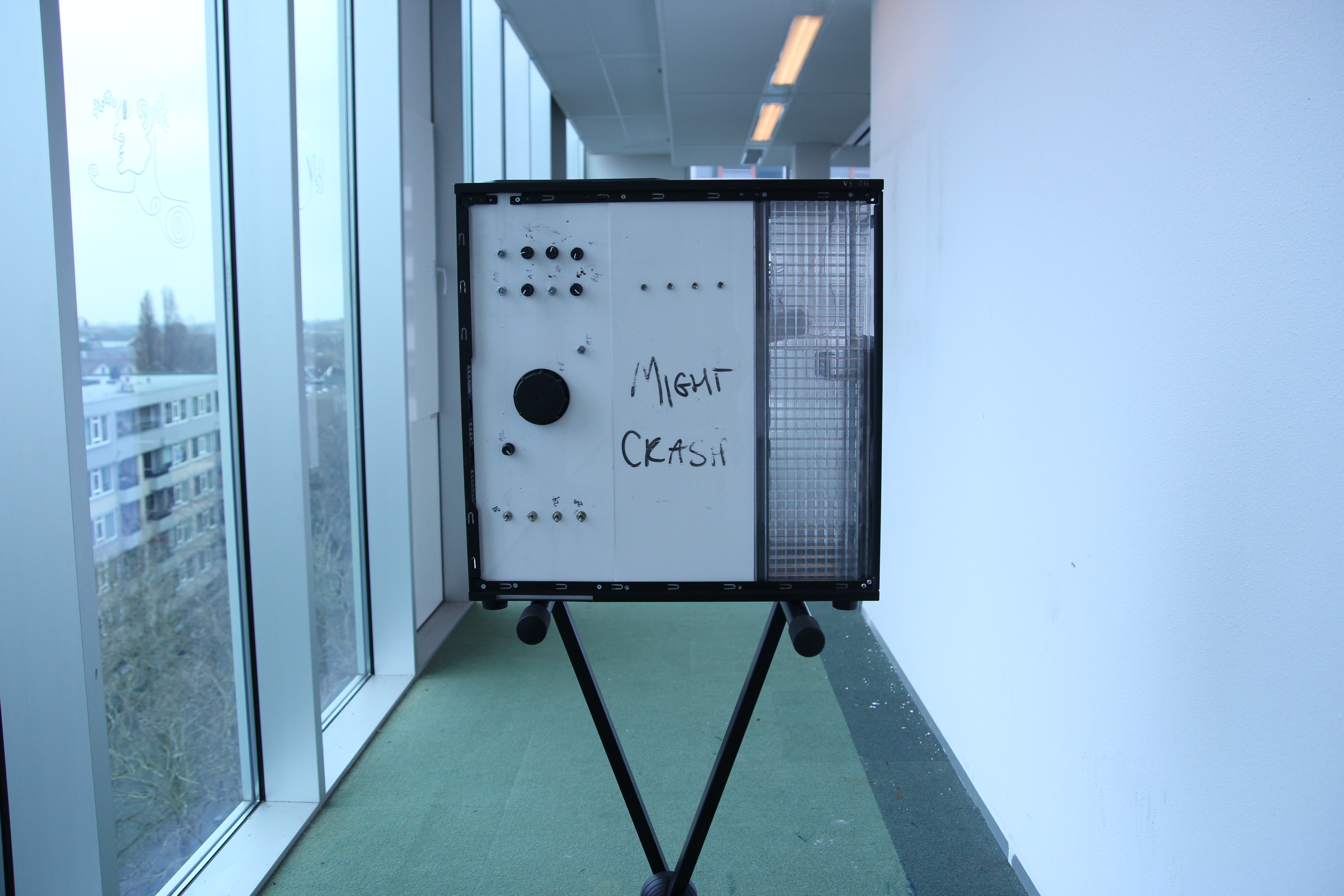
Offline VS-011
Offline VS-011 -
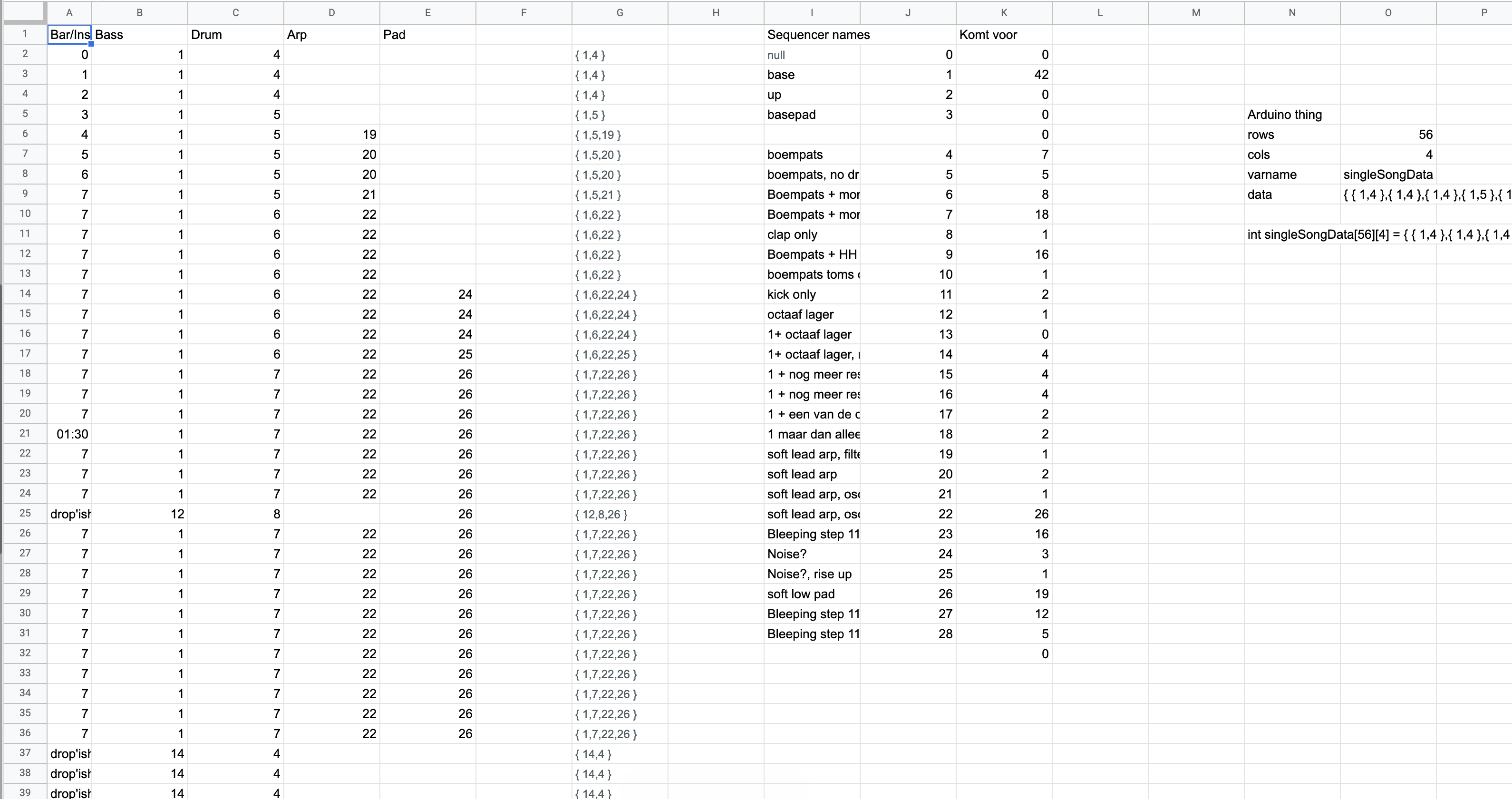
CSV of the song structure used by VS-011
CSV of the song structure used by VS-011
